Scuba diving allows you to explore an incredible underwater world, but descending beneath the surface creates pressure changes that your ears must adjust to. If you have ever experienced ear discomfort, a blocked sensation, or difficulty descending during a dive, you may need to improve your ear equalization technique.
- What Is Ear Equalization in Scuba Diving?
- Why Do Your Ears Need to Be Equalized Underwater?
- 6 Ways to Equalize Your Ears When Scuba Diving
- When Should You Equalize Your Ears During a Scuba Dive?
- 8 Tips to Equalize Your Ears More Easily
- What Should You Do If You Cannot Equalize Your Ears Underwater?
- Common Ear Equalization Mistakes Beginners Should Avoid
- Frequently Asked Questions About Equalizing Ears While Scuba Diving
- How do you equalize your ears when scuba diving?
- What is the easiest way to clear your ears underwater?
- How often should you equalize your ears when diving?
- Why do my ears hurt when I scuba dive?
- Can you scuba dive if you cannot equalize your ears?
- Is the Valsalva maneuver safe for scuba diving?
- Can a cold affect ear equalization during scuba diving?
- Can you equalize your ears while wearing a scuba mask?
- Final Thoughts
To equalize your ears when scuba diving, gently open your Eustachian tubes so air can enter your middle ears and balance the surrounding water pressure. Common methods include the Valsalva maneuver, Toynbee maneuver, Frenzel technique, swallowing, yawning, and voluntary tubal opening. Start equalizing before you feel pressure, repeat frequently during descent, and never force it if you experience pain.
In this guide, you will learn how ear equalization works, six techniques divers can practice, common mistakes to avoid, and what to do when your ears will not clear underwater.
What Is Ear Equalization in Scuba Diving?
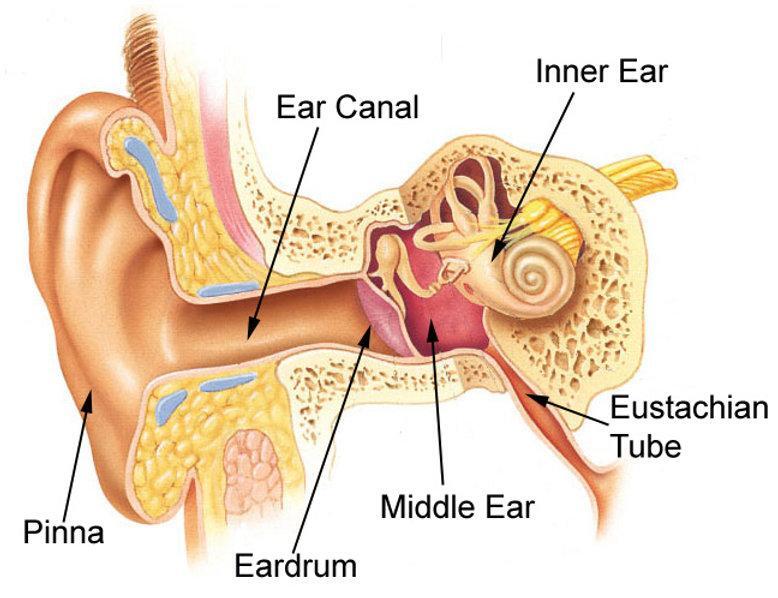
Ear equalization is the process of balancing air pressure inside your middle ears with the increasing water pressure surrounding your body during a scuba dive.
Your middle ear is an air-filled space connected to the back of your throat through two small passages called Eustachian tubes. These tubes help regulate pressure on both sides of your eardrums.
When you descend underwater, the surrounding pressure increases. Without equalization, the pressure outside your eardrum becomes greater than the pressure inside your middle ear.
This pressure difference can cause discomfort, ear pain, and potentially an injury known as middle-ear barotrauma.
Equalization allows air to enter the middle ear through the Eustachian tubes, helping balance the pressure.
Why Do Your Ears Need to Be Equalized Underwater?
Water pressure increases as you descend, even when you are only a few feet below the surface.
According to Boyle’s law, gas volume decreases as surrounding pressure increases, assuming temperature and the amount of gas remain constant.
This explains why the air inside your middle ear needs to be replenished during descent.
For example:
- At the water surface, pressure is approximately 1 atmosphere.
- At 33 feet (10 meters), pressure is approximately 2 atmospheres.
- At 66 feet (20 meters), pressure is approximately 3 atmospheres.
- At 99 feet (30 meters), pressure is approximately 4 atmospheres.
As pressure increases, your eardrums experience a greater pressure difference if your middle ears are not equalized.
According to Divers Alert Network (DAN), middle-ear barotrauma can occur at relatively shallow depths. Learning proper equalization is therefore an essential scuba diving skill.
6 Ways to Equalize Your Ears When Scuba Diving
Different divers find different equalization methods comfortable and effective. Learning more than one technique can help you understand which methods work best for you.
Here are six commonly discussed methods.
1. Valsalva Maneuver
The Valsalva maneuver is one of the most commonly taught methods of ear equalization.
How to perform it gently:
- Pinch your nostrils closed.
- Keep your mouth closed.
- Gently attempt to exhale through your nose.
- Stop if you experience discomfort.
This creates pressure in the throat that may push air through the Eustachian tubes into the middle ears.
Important: Never blow forcefully. Excessive pressure during the Valsalva maneuver can cause inner-ear injury, particularly when the Eustachian tubes are blocked.
2. Toynbee Maneuver
The Toynbee maneuver uses swallowing to help open the Eustachian tubes.
How it works:
- Pinch your nostrils closed.
- Keep your mouth closed.
- Swallow gently.
- Notice whether your ears feel more balanced.
Some divers find this technique useful because swallowing activates muscles involved in opening the Eustachian tubes.
Do not assume it will work for everyone. If your ears remain blocked, stop descending.
3. Frenzel Maneuver
The Frenzel maneuver uses the tongue and throat muscles to create pressure that helps open the Eustachian tubes.
Basic technique:
- Close your nostrils.
- Close the back of your throat.
- Position your tongue as if making the letter K.
- Gently move the back of your tongue upward.
This technique can be difficult for beginners because it requires coordination and practice.
Consider learning it from a qualified diving instructor rather than experimenting with force underwater.
4. Lowry Technique
The Lowry technique combines elements of the Valsalva and Toynbee maneuvers.
It involves closing the nostrils, gently attempting to exhale, and swallowing at the same time.
This method may help some divers who find individual techniques less effective.
Never use excessive force, and stop if you experience discomfort.
5. Edmonds Technique
The Edmonds technique combines jaw movement with pressure equalization.
The basic steps include:
- Push your jaw forward and slightly downward.
- Position your soft palate and throat muscles.
- Close your nostrils.
- Use a gentle equalization movement.
This technique requires practice and should be learned under appropriate instruction.
6. Voluntary Tubal Opening
Voluntary tubal opening involves using the muscles around the Eustachian tubes to open them without pinching your nose and blowing.
You can practice the basic muscle movements by:
- Gently moving your jaw forward.
- Practicing a yawning motion.
- Swallowing and noticing the movement around your ears.
- Learning to control the muscles around your soft palate and throat.
Some experienced divers develop the ability to equalize using these movements without performing a conventional Valsalva maneuver.
Not every diver can master this technique easily.
When Should You Equalize Your Ears During a Scuba Dive?
One of the most important beginner diving habits is to equalize early and frequently.
Do not wait until your ears begin hurting.
Follow these general guidelines:
Before entering the water
Check that you can comfortably equalize your ears at the surface. Avoid diving if you have congestion, an ear injury, or difficulty equalizing.
During the first few feet of descent
Begin equalizing before you feel pressure. Continue frequently as you descend.
During the descent
Maintain a slow, controlled descent. Equalize regularly rather than waiting for discomfort.
When you experience difficulty
Stop descending. Ascend slightly until the discomfort disappears and try again gently. If you still cannot equalize, end the dive.
During ascent
Allow pressure to equalize naturally as surrounding pressure decreases. If you experience an unusual blocked sensation or reverse block, stop and follow your training and dive professional’s guidance.
DAN recommends equalizing early, descending slowly, and avoiding forceful attempts.
8 Tips to Equalize Your Ears More Easily
These practical habits can help beginners prepare for safer descents.
1. Start Equalizing Before You Feel Pressure
Do not wait until your ears hurt. Begin at the surface and continue regularly during descent.
2. Descend Slowly
A controlled descent gives you more time to equalize and recognize discomfort before it becomes a problem.
3. Try a Feet-First Descent
A feet-first descent may make equalization easier for some divers because of the orientation of the Eustachian tubes.
4. Use a Descent Line
A descent line can help you control your speed and pause when necessary.
5. Stay Relaxed
Anxiety and rushing can make a challenging descent more difficult. Communicate with your dive buddy and instructor.
6. Do Not Dive With Nasal Congestion
Colds, allergies, and other conditions that cause nasal congestion can interfere with equalization.
If you are congested or cannot equalize comfortably, postpone the dive.
7. Learn More Than One Equalization Technique
Learning different techniques gives you more options to discuss and practice with your instructor.
8. Never Force Your Ears to Clear
Pain is a warning sign. Do not continue descending or blow harder to overcome a blockage.
What Should You Do If You Cannot Equalize Your Ears Underwater?
Difficulty equalizing is a common concern among beginner divers.
If your ears will not clear, follow these safety steps:
- Stop descending immediately.
- Signal your dive buddy or instructor that you have a problem.
- Ascend slightly until the discomfort disappears.
- Try a gentle equalization technique only if comfortable.
- If you still cannot equalize, end the dive with your buddy and follow your training.
Never continue descending while experiencing ear pain.
Do not repeatedly perform forceful Valsalva maneuvers against blocked Eustachian tubes.
If you experience persistent pain, hearing loss, ringing in your ears, dizziness, or vertigo, stop diving and seek medical evaluation. A healthcare professional experienced in diving medicine can assess possible ear injuries.
Common Ear Equalization Mistakes Beginners Should Avoid
Understanding common mistakes can help you develop better diving habits.
Waiting until your ears hurt: Equalize before discomfort develops.
Blowing too hard: Forceful equalization can cause injury. Gentle techniques are important.
Descending too quickly: Rapid descent makes it harder to recognize and address equalization problems.
Diving with a cold: Congestion may prevent the Eustachian tubes from opening properly.
Ignoring your dive buddy: Underwater communication is essential. Tell your buddy when you experience difficulty.
Continuing despite pain: Never treat ear pain as something you must tolerate to complete a dive.
Frequently Asked Questions About Equalizing Ears While Scuba Diving
How do you equalize your ears when scuba diving?
You can equalize by gently opening your Eustachian tubes using methods such as swallowing, yawning, the Toynbee maneuver, or a gentle Valsalva maneuver. Start before descending and repeat regularly. Never force equalization.
What is the easiest way to clear your ears underwater?
Some beginners find the gentle Valsalva maneuver easier to understand, while others prefer swallowing or jaw movements. The best method depends on the individual. Learn proper techniques from a qualified scuba instructor.
How often should you equalize your ears when diving?
Start equalizing at the surface or before descent and continue frequently as you descend. Do not wait until you experience pain or pressure.
Why do my ears hurt when I scuba dive?
Ear pain can occur when water pressure outside the eardrum becomes greater than the pressure inside the middle ear. This may happen when the Eustachian tubes do not open properly to allow pressure equalization.
Can you scuba dive if you cannot equalize your ears?
You should not continue a dive if you cannot equalize comfortably. Stop descending and end the dive if the problem persists. Consult a healthcare professional if the difficulty continues.
Is the Valsalva maneuver safe for scuba diving?
A gentle Valsalva maneuver is commonly taught for ear equalization. However, blowing forcefully or performing it against blocked Eustachian tubes can cause injury. Never force the technique.
Can a cold affect ear equalization during scuba diving?
Yes. A cold or nasal congestion can interfere with the Eustachian tubes and make equalization difficult. Postpone diving if you cannot equalize comfortably.
Can you equalize your ears while wearing a scuba mask?
Yes. Divers commonly pinch their nostrils through the mask skirt to perform the Valsalva maneuver. Other techniques involving swallowing, jaw movement, or throat muscles do not require pinching the nose.
Final Thoughts
Learning how to equalize your ears when scuba diving is an important part of becoming a confident and responsible diver.
The key is to start early, descend slowly, practice gentle techniques, and recognize when your body is telling you to stop.
The Valsalva, Toynbee, Frenzel, Lowry, Edmonds, and voluntary tubal opening methods are useful techniques to understand, but not every method works equally well for every diver.
Remember that a successful dive is not about reaching a particular depth. It is about following your training, respecting your physical limits, and enjoying the underwater experience safely.
Always prioritize your ears and your safety over completing a dive.
References and Further Reading
- Divers Alert Network (DAN): Ear Equalization Guidelines for Scuba Divers
- DAN: How to Equalize – Different Equalization Techniques
- DAN: 10 Tips for Easy Equalizing
Editorial safety note: This educational article is not a substitute for scuba certification, professional instruction, or medical advice. Have the final article reviewed by a qualified diving instructor or diving-medicine professional before publication.