Poor buoyancy is the single biggest problem in recreational scuba diving. It destroys coral reefs — accidental fin kicks and uncontrolled contact are the number one cause of reef damage by divers worldwide. It wastes your air supply. It makes diving exhausting, stressful, and uncomfortable.
- Why Buoyancy Control Is Harder Than It Looks
- Tip 1: Nail Your Weighting First — Everything Depends on This
- Tip 2: Master the Five-Point Descent — Every Single Dive
- Tip 3: Use Your Lungs as Your Primary Fine-Tuning Tool
- Tip 4: The Hover Exercise — Your Most Important Buoyancy Drill
- Tip 5: Fix Your Body Position (The Most Overlooked Buoyancy Factor)
- Tip 6: Stop Kicking — Good Buoyancy Requires Almost No Fin Movement
- Tip 7: Slow Everything Down — Buoyancy Has a Time Delay
- Tip 8: Breathe Slowly and Deeply — Not Fast and Shallow
- Tip 9: Do the PADI Peak Performance Buoyancy Specialty
- Tip 10: Recalibrate Your Weighting for Every New Wetsuit and Destination
- Tip 11: Vent Your BCD Actively During Every Ascent
- Tip 12: Dive Shallow Reefs Deliberately for Buoyancy Practice
- CONCLUSION
Mastered buoyancy, on the other hand, is transformative. When you achieve true neutral buoyancy — that state of effortless suspension in the water column — diving becomes meditation. You become part of the environment rather than a visitor crashing through it.
I’ve coached hundreds of divers through buoyancy breakthroughs over 10+ years. Here are the 12 most effective techniques, in order of importance.
Why Buoyancy Control Is Harder Than It Looks
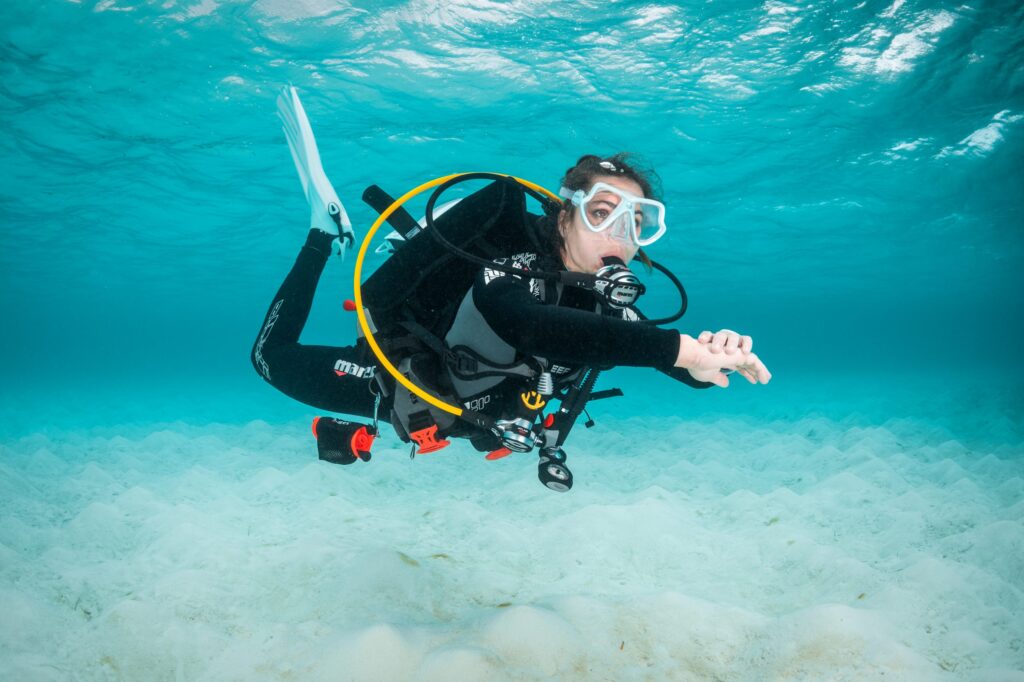
Buoyancy in scuba involves three constantly interacting systems:
- Your BCD (inflated or deflated) — your primary macro-buoyancy tool for large position changes
- Your wetsuit — which compresses with depth, progressively losing buoyancy as you go deeper
- Your breathing — lungs as a natural buoyancy device: inhale = rise, exhale = sink
Most beginner divers over-inflate their BCD to compensate for feeling heavy, then add extra weight to compensate for the over-inflation. This creates a classic instability cycle: too much lead + too much air in the BCD = constant yo-yo movement up and down through the water column, burning air rapidly and stressing the reef below.
The solution begins before you even enter the water.
Tip 1: Nail Your Weighting First — Everything Depends on This
Correct weighting is the non-negotiable foundation of good buoyancy. With correct weight, three things should be true:
- At the surface with a completely empty BCD, you should float at eye level
- When you exhale fully, you should begin slowly sinking
- At 5 metres with a near-empty tank at the end of the dive, you should hover neutrally with a normal breath
The surface weighting check (do this every time you change wetsuits, dive computers, or any equipment):
- Float at the surface with your BCD completely empty
- Breathe normally — you should float at eye/mouth level
- Take a deep breath — you should rise a few centimetres
- Exhale fully — you should slowly sink below the surface
💡 PRO TIP: If you need to kick to stay at the surface with an empty BCD: you are too heavy. If you cannot sink even on a full exhale: you are too light. Over-weighting by 2–4kg is the single most common buoyancy mistake among recreational divers of all experience levels.
Tip 2: Master the Five-Point Descent — Every Single Dive
A controlled, deliberate descent eliminates buoyancy problems before they start. Use this five-point process on every descent:
- Signal OK to your buddy and look at your depth gauge/computer
- Orient yourself vertically and confirm your descent direction
- Deflate your BCD completely — hold the deflate button for a full 3 seconds
- Breathe normally throughout — never hold your breath
- Equalise your ears before you feel any pressure — start before you reach 1 metre
Add air to your BCD slowly and in small increments as you descend. Remember: your wetsuit compresses with depth and loses buoyancy, so you’ll need less BCD inflation at 20m than you did at 5m for the same neutral position.
Tip 3: Use Your Lungs as Your Primary Fine-Tuning Tool
This is the technique that separates average divers from excellent ones. Your lungs hold approximately 4–6 litres of air — they are the most responsive and precise buoyancy tool available to you, and most divers dramatically underuse them.
- To rise slightly (0.5–1m): take a slightly deeper breath and hold for a count of two
- To sink slightly (0.5–1m): exhale a little more fully and pause briefly at the bottom of the breath
- To hold exact position: find the lung volume level that keeps you perfectly neutral and breathe around that volume
For fine buoyancy adjustments of less than 1 metre, use your breathing exclusively. Reserve your BCD inflator for larger position changes of 2+ metres. Divers who are constantly reaching for their BCD inflator button are relying on the wrong tool for small adjustments.
Tip 4: The Hover Exercise — Your Most Important Buoyancy Drill
Find a sandy patch of seabed at 6–10 metres depth. Completely deflate your BCD. Try to hover motionless at this depth using only your breathing for a full 2 minutes without touching the bottom or ascending.
This single exercise reveals everything about your buoyancy:
- Sink immediately to the bottom: slightly over-weighted — remove 1–2kg and repeat
- Float upward despite exhaling fully: slightly under-weighted or BCD not completely deflated
- Can hover but only by subtly holding your breath: focus on consistent breathing rhythm and lung volume
Perform this drill at the beginning of your next 5 consecutive dives. Most divers report a dramatic, noticeable improvement by the third session — the muscle memory builds quickly with focused repetition.
Tip 5: Fix Your Body Position (The Most Overlooked Buoyancy Factor)
Buoyancy is not only about air and lead weights — body position (trim) has a profound effect on stability and efficiency.
The ideal horizontal trim position:
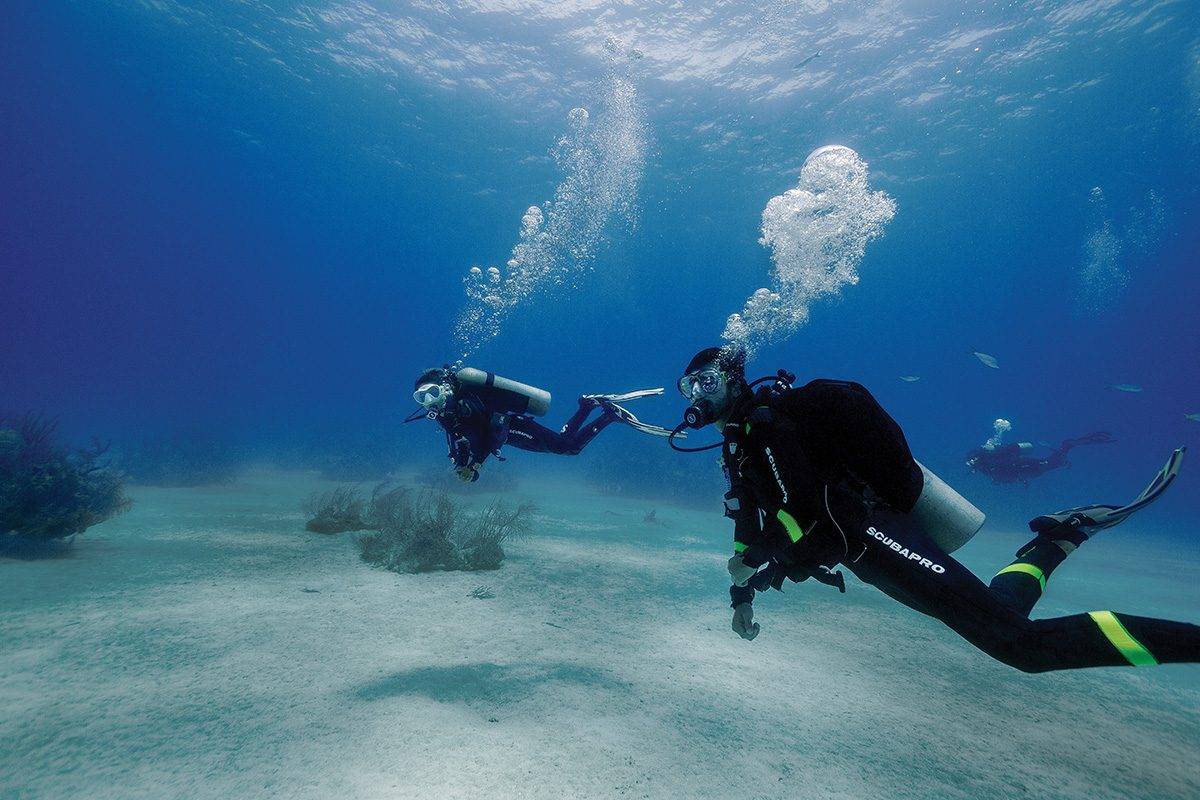
- Body perfectly horizontal, like Superman flying — parallel to the seabed at all times
- Legs positioned slightly higher than head level for optimal horizontal trim
- Arms tucked in close to your body for streamlining and reduced drag
Problems caused by poor trim:
- Head-up, feet-down position (typical of beginners): fins constantly kick sediment, excessive drag burns more air, rapid ascent risk when adding BCD air
- Head-down position: causes instability and difficulty controlling ascent rate
Quick fixes for poor trim:
- Move your tank lower in your BCD harness — this shifts weight to your lower body and lifts your feet into horizontal position
- Use ankle weights (0.5–1kg each) if your legs are consistently too high
- Consciously think ‘horizontal’ at the start of every dive until correct trim becomes automatic
Tip 6: Stop Kicking — Good Buoyancy Requires Almost No Fin Movement
One of the clearest indicators of poor buoyancy is constant, energetic finning. When your buoyancy and trim are correctly set up:
- You should be able to hover completely motionless with zero fin movement for extended periods
- Movement through the water requires only slow, gentle fin strokes — not rapid flutter kicking
- Kicking to stay off the bottom means you are over-weighted. Constant kicking to maintain your depth means your BCD inflation is wrong.
💡 PRO TIP: The frog kick and back kick are superior to the traditional flutter kick for buoyancy control in coral reef environments. The frog kick generates forward thrust with a horizontal leg motion that does not disturb sediment below you and does not affect your vertical position.
Tip 7: Slow Everything Down — Buoyancy Has a Time Delay
Buoyancy adjustments do not produce instant results. The air you add to your BCD takes 3–5 seconds to produce a noticeable buoyancy effect. Divers who add air, don’t feel immediate change, add more air, still don’t feel it, then add more — and suddenly find themselves rocketing toward the surface — are falling victim to the time-delay trap.
The golden rule of BCD management: Make one small adjustment. Wait 5 seconds. Evaluate the result. Then adjust again if genuinely needed. Patience is, without exaggeration, the most important single buoyancy skill.
Tip 8: Breathe Slowly and Deeply — Not Fast and Shallow
Slow, diaphragmatic breathing achieves two critical things simultaneously:
- Dramatically improves buoyancy stability: shallow, rapid breathing creates a rapid up-down oscillation with each breath cycle
- Reduces air consumption by 15–30%: slower breathing produces less CO2, extends your comfortable bottom time, and stretches your tank significantly further
📊 STAT: Target breathing rate underwater: 6–10 breaths per minute at rest (vs 15–20 breaths per minute at the surface). This single change reduces air consumption by 15–30% for most divers.
Tip 9: Do the PADI Peak Performance Buoyancy Specialty
The PADI Peak Performance Buoyancy (PPB) specialty course is specifically designed to address every technique in this guide in a structured, instructor-assessed format. It consists of two dives focused entirely on buoyancy exercises, trim, weight checks, and hovering skills. Completion typically halves a diver’s air consumption and dramatically improves their dive profiles within the specialty dives themselves.
Tip 10: Recalibrate Your Weighting for Every New Wetsuit and Destination
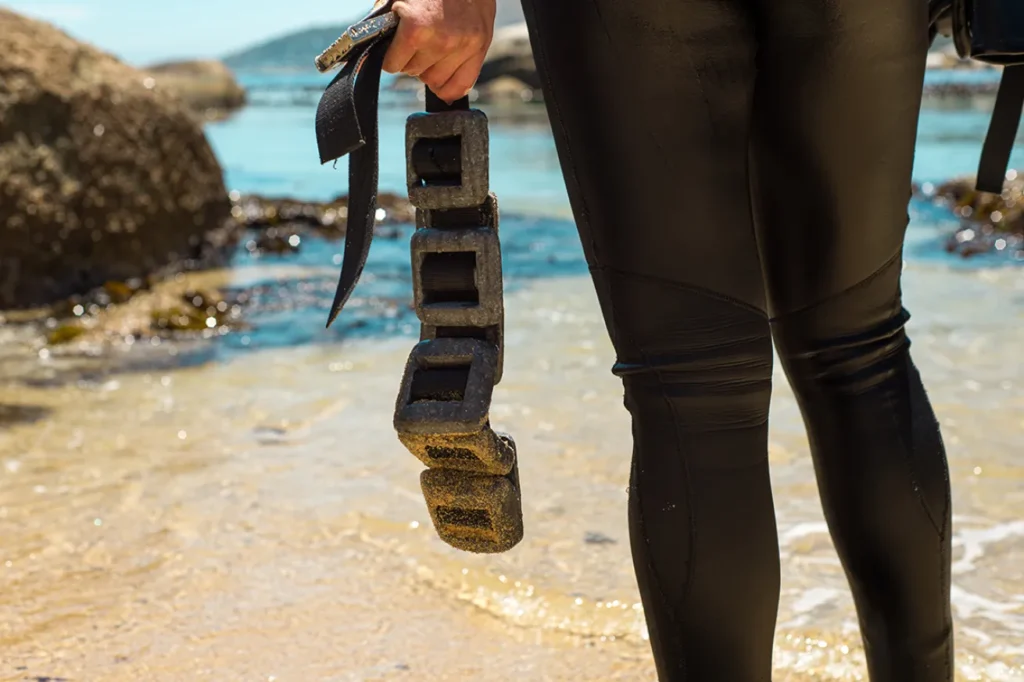
A 3mm wetsuit requires roughly 3–5kg less lead than a 7mm wetsuit of the same size. Saltwater requires 2–3kg more lead than fresh water. If you dive in the UK in a 7mm drysuit and then fly to Thailand and rent a 3mm wetsuit — your weighting is completely wrong. Perform a fresh weighting check at the surface before every dive trip in new equipment or new water.
Tip 11: Vent Your BCD Actively During Every Ascent
As you ascend from depth, the air in your BCD expands according to Boyle’s Law — a BCD that was perfectly neutral at 20 metres becomes progressively over-inflated at 10 metres, and dangerously over-inflated at 5 metres. If not actively vented, this expanding air will accelerate your ascent uncontrollably.
Actively press and hold your dump valve throughout every ascent. Never let your BCD self-manage during an ascent — it cannot. You are always responsible for venting expanding air.
Tip 12: Dive Shallow Reefs Deliberately for Buoyancy Practice
Shallow reef dives at 5–12 metres are the ideal buoyancy training environment. Several advantages make them perfect for focused skill development:
- Less depth means less wetsuit compression variation — a more consistent buoyancy environment to learn in
- Tighter no-decompression limits at 5–10m encourages disciplined, slow, careful movement rather than rushing
- The beautiful shallow reef provides powerful motivation to hover perfectly rather than crash into it
- More natural light makes it easier to see your body position and trim relative to the reef
CONCLUSION
Buoyancy control is the dividing line between divers who are simply present underwater and divers who are truly part of the environment. It takes time — typically 25–50 dives before it becomes fully instinctive — but every improvement makes diving more enjoyable, more sustainable, and more magical. Start with your weighting. Fix your trim. Use your lungs for fine adjustment. Slow everything down. Apply patience at every step. The reef will thank you — and so will your air gauge.