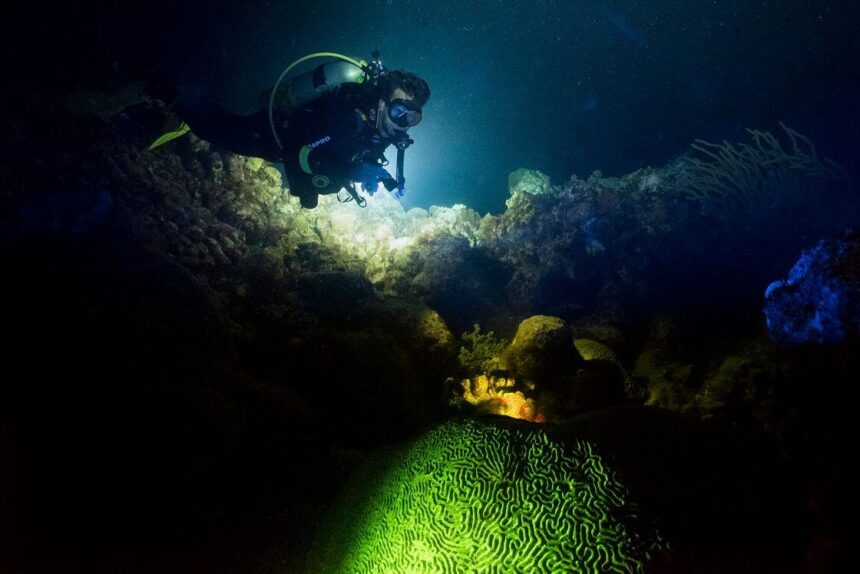
There is something almost magical about scuba diving at night. The ocean transforms completely once the sun goes down. Creatures that hide during the day come out to feed, colours shift and shimmer in your torch beam, and the sense of being in a completely different world becomes even stronger. Night diving is one of the most exciting specialisations available to certified divers, and with the right preparation, it is also a very safe and rewarding experience.
- Why Night Diving Is Worth It
- Essential Equipment for a Night Dive
- Pre-Dive Planning for Night Dives
- Torch Signals for Night Dives
- Entering the Water for a Night Dive
- How to Navigate on a Night Dive
- Staying Together With Your Buddy at Night
- The Best Marine Life to Look for on a Night Dive
- Is Night Diving Safe for Beginners?
- Frequently Asked Questions
- Take the Plunge After Dark
In this complete guide, we share the best scuba diving night dive tips for 2026, covering everything from the equipment you need to how to communicate with your buddy in the dark, and which marine creatures you are most likely to encounter.
Why Night Diving Is Worth It
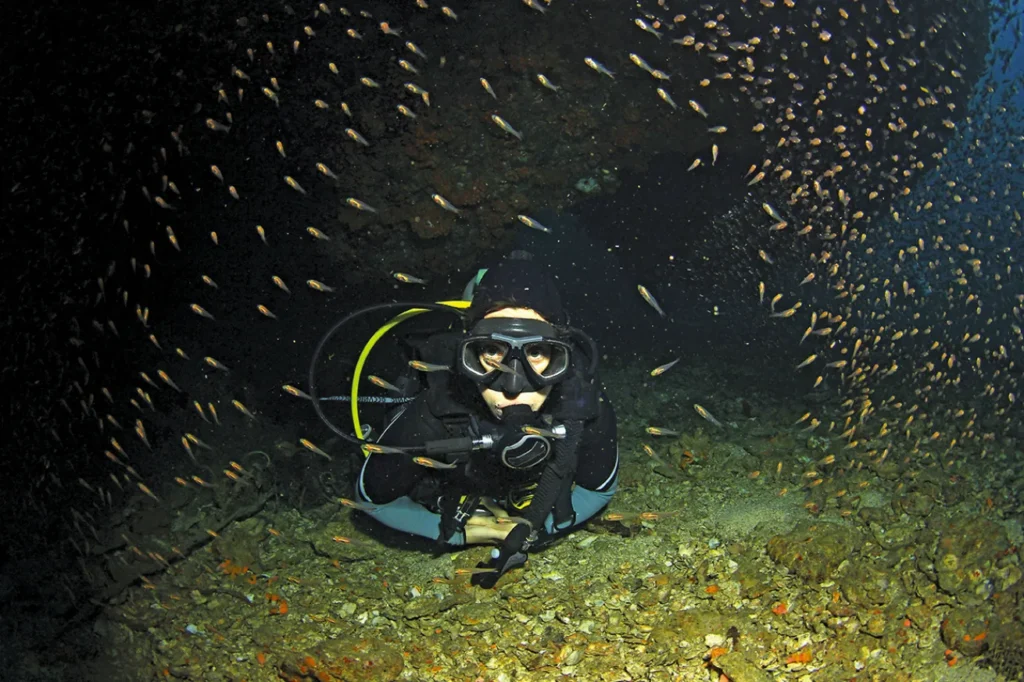
Many divers who have done their first night dive describe it as one of the most memorable experiences of their lives. The reason is simple: the nocturnal ocean is a completely different environment from the daytime reef. Octopuses emerge from their dens to hunt. Lobsters and crabs march boldly across the sand. Lionfish cruise the shallows. Sleeping parrotfish glow with bioluminescent mucus cocoons. Coral polyps extend their tiny tentacles to feed in a display you will never see during the day.
Your torch beam also brings out colours that daylight simply cannot show at depth, because seawater filters out red and orange wavelengths as you descend. At depth during the day, everything looks blue or green. At night, your torch reveals the full spectrum of the reef in vivid, brilliant colour.
Essential Equipment for a Night Dive
Primary Torch
Your primary torch is your most important piece of equipment for a night dive. Choose a torch that is bright enough to illuminate the reef clearly — at least 1,000 lumens is a good starting point for recreational night dives. The torch should have a decent burn time, ideally three or more hours on its highest setting, so you never have to worry about it dying during a dive. Always check the battery level before every night dive and carry fresh batteries or a fully charged battery pack.
Backup Torch
Always carry a smaller backup torch. If your primary torch fails during a dive, which does happen, your backup light allows you to safely navigate back to your exit point. A small clip-on torch or a compact cylinder light works well as a backup. Never enter the water for a night dive without two light sources.
Glow Sticks or Tank Markers
Many night divers attach a small glow stick or LED tank marker to the back of their tank. This allows your dive buddy and the boat crew above to track your position on the surface between checks. Some divers also clip a small glow stick to the back of their BCD strap so their buddy can always see where they are underwater.
Surface Marker Buoy (SMB)
A surface marker buoy is important on any dive, but it is even more critical at night when boat crews and surface support cannot easily see where divers are in the water. Always carry a brightly coloured SMB and deploy it before ascending so boats can see your position.
Pre-Dive Planning for Night Dives
Good planning is the foundation of every safe dive, but it matters even more at night when conditions can feel more disorienting. Before your night dive, visit the site during daylight if possible. Walk along the entry point, note any landmarks, observe where the reef edges are, and identify where you will exit the water. Having a clear mental picture of the site before darkness falls makes the dive far less stressful.
Discuss the dive plan thoroughly with your buddy. Agree on a maximum depth, a turn time or turn pressure, hand signals specific to night diving including torch signals, what to do if you get separated, and how you will signal each other from a distance. The more you plan, the more relaxed and enjoyable the dive will be.
Torch Signals for Night Dives
Regular hand signals are hard to see in the dark, so night divers use torch signals to communicate. Move your torch slowly in a large circle to signal okay. Move your torch rapidly back and forth to signal that something is wrong or that you need your buddy to come to you immediately. Point your torch at a specific area of the reef or at your buddy to draw attention.
When you want to point something out to your buddy, first get their attention by shining your torch on them briefly, then move your torch to the thing you want to show them. This is much more effective than wildly sweeping the torch around hoping they will follow it.
Entering the Water for a Night Dive
Night dive entries are usually from a boat or a familiar shore entry point. Whether you are entering from a boat or the shore, do your final equipment check in the light — on the boat or at the water’s edge before your torch is your only light source. Make sure your torch is on and working before you enter the water.
Once you are in the water, your eyes will adjust to the darkness within a minute or two. Resist the urge to immediately blast your torch at full brightness at the reef. Let your eyes adjust first, and you will actually see much more.
How to Navigate on a Night Dive
Navigation can feel tricky at night because the usual visual landmarks look different in torchlight. Use your compass as your primary navigation tool. Follow a simple compass bearing out from the entry point and reverse it on the way back. Alternatively, use a fixed reference like the reef edge or the slope of the seabed to maintain your orientation.
Stay shallower than you might on a daytime dive. Most of the exciting night time marine life is found in the shallows, and staying at a moderate depth makes navigation easier and reduces the risk of disorientation.
Staying Together With Your Buddy at Night
Buddy separation at night is more serious than during the day because finding a lost buddy in dark water is significantly harder. Stay within arm’s reach of your buddy at all times, especially in low visibility conditions. If you do get separated, do not panic. Stop, look around with your torch for your buddy’s light, and if you cannot find them within one minute, ascend slowly to the surface and reunite there.
Never swim off on your own to investigate something interesting without first making sure your buddy is with you. Night dives are not the time for solo exploration.
For any dive, day or night, knowing your equipment well is essential. Check our scuba tank weight chart to understand how your tank choice affects your buoyancy, which is especially important when you are navigating in the dark.
The Best Marine Life to Look for on a Night Dive
One of the greatest joys of night diving is the wildlife encounters that are simply not possible during the day. Octopuses are perhaps the most exciting night time residents of any tropical reef. They are active hunters after dark and will often let you observe them at close range as they move between coral heads searching for crabs and small fish.
Cuttlefish are another spectacular night dive encounter, flashing complex colour patterns across their skin as they hunt. Moray eels emerge from their daytime hiding spots and hunt actively across the reef. Nudibranchs, which are often difficult to spot during the day, become more visible at night against the stillness of the reef.
If you are lucky enough to be in the right place, bioluminescence can be one of the most breathtaking experiences in diving. When you turn off your torch and wave your hand through the water, tiny plankton emit flashes of blue-green light that feel genuinely otherworldly.
Is Night Diving Safe for Beginners?
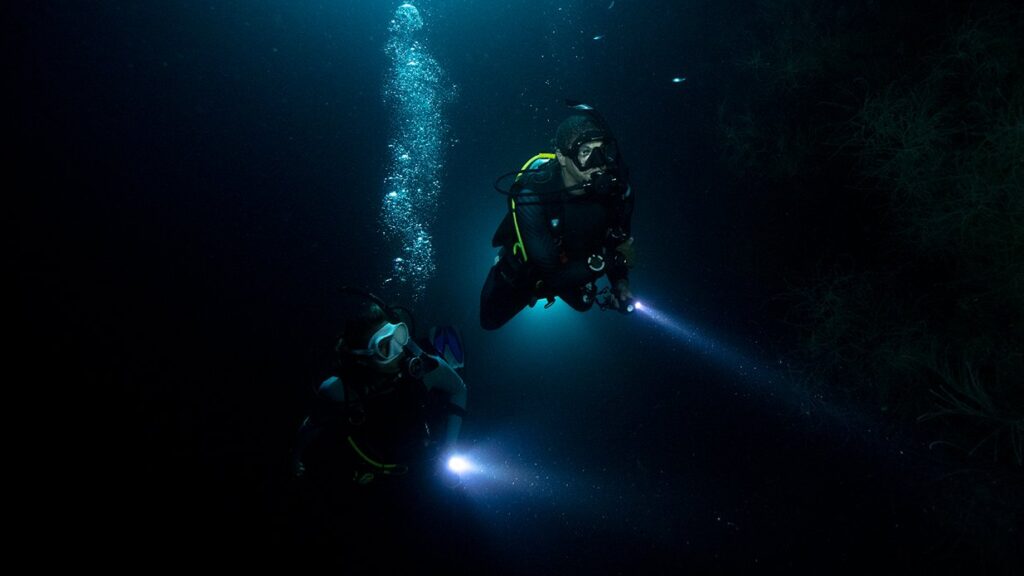
Most training agencies recommend that divers have some daylight open water dive experience before attempting their first night dive. You do not need to be highly experienced, but being comfortable with buoyancy control, navigation, and buddy communication makes the night dive experience much safer and more enjoyable.
The PADI Night Diver speciality course is a great way to learn night diving in a structured, supervised environment. It typically consists of three night dives with an instructor who will guide you through all the techniques covered in this article. If you want to start night diving with confidence, a speciality course is the best investment you can make.
Frequently Asked Questions
Do I need a special certification to go on a night dive?
You do not need a special certification for your first guided night dive if you go with a dive operator who provides supervision. However, a Night Diver speciality certification, like the one offered by PADI, is highly recommended if you plan to night dive regularly or independently. It teaches the specific skills and judgement needed to dive safely in the dark.
What are the biggest risks of scuba diving at night?
The main risks of night diving are disorientation, buddy separation, and equipment failure, particularly torch failure. All three can be managed effectively with good planning, reliable equipment, and careful buddy communication. Night diving is not inherently more dangerous than day diving for a prepared, experienced diver.
What is the best time to go on a night dive?
Most divers prefer to enter the water about 30 to 45 minutes after sunset. By this time it is fully dark, the nocturnal creatures have started to emerge, and the reef has begun its dramatic transformation. Some operators offer dusk dives that start just before sunset and run into full darkness, which gives you the chance to see both the day and night reef on a single dive.
Can I do a night dive if I am afraid of the dark?
Many divers who are initially nervous about the dark find that the focus required in night diving actually helps calm their fears. Your torch keeps your immediate environment well lit, and the incredible marine life keeps your attention fully engaged. Going with an experienced guide for your first night dive is strongly recommended if darkness makes you anxious.
How do I find a good night dive site?
Ask local dive operators for their favourite night dive sites. Shore sites with easy entries and exits are ideal for beginners. Boat night dives over a familiar reef are also excellent options. Avoid sites with strong currents or complex navigation for your first few night dives until you are comfortable with the unique demands of diving in the dark.
Take the Plunge After Dark
Night diving opens up a completely different side of the ocean, one that very few people ever get to see. With the right preparation, good equipment, and a trusted buddy, it is one of the most rewarding experiences in all of scuba diving. Prepare well, go slowly, and let the underwater night reveal its secrets to you. For more diving guides, tips, and inspiration, explore everything at Scoobadive Guide.