It’s one of the first questions every new diver asks — and one of the most misunderstood. ‘How deep can you scuba dive?’ has several different answers depending on whether you’re talking about recreational limits, technical diving, or the absolute records of human achievement underwater.
- Recreational Scuba Depth Limits: What Your Certification Allows
- Why Depth Limits Exist: The Physics of Pressure
- Technical Diving Depth Limits: Beyond Recreational
- The Deepest Scuba Dive in History
- What Happens to the Human Body at Extreme Depth
- How Deep Do You Actually Dive on a Typical Holiday?
- Depth vs Certification: Quick Reference
- CONCLUSION
Let’s start with the practical answer for 99% of recreational divers, then work all the way down to the deepest scuba dive ever completed.
Recreational Scuba Depth Limits: What Your Certification Allows
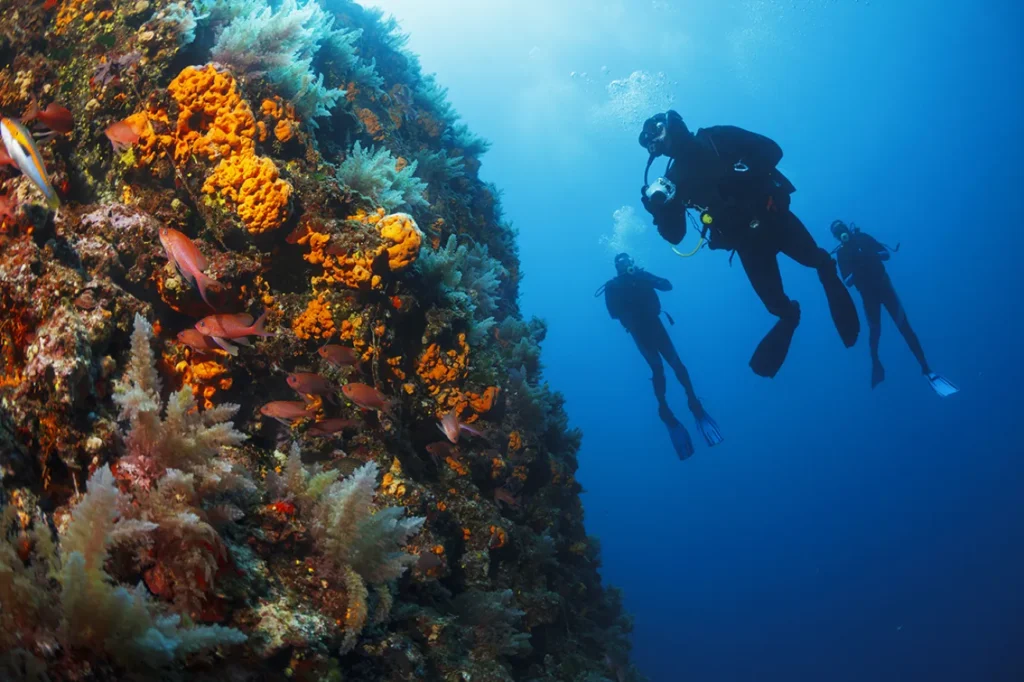
All major diving agencies — PADI, SSI, NAUI, and BSAC — set the following standardised recreational depth limits:
- Open Water Diver certification: Maximum 18 metres (60 feet) during training; general recreational recommendation of 18–20 metres for independent diving
- Advanced Open Water Diver: Maximum 30 metres (100 feet)
- Deep Diver Specialty: Maximum 40 metres (130 feet)
📊 STAT: 40 metres (130 feet) is the absolute recreational limit. Beyond this requires technical diving training, specialised gas mixtures, and decompression planning.
This is not an arbitrary rule. At 40 metres, nitrogen narcosis becomes significant for most divers, no-decompression time is extremely limited (as little as 7–10 minutes), and any rapid ascent from depth is potentially life-threatening.
Why Depth Limits Exist: The Physics of Pressure
Water pressure increases by 1 atmosphere (14.7 psi / 1 bar) for every 10 metres of depth. At 40 metres, you’re breathing air at 5 atmospheres of pressure — meaning nitrogen is being absorbed into your tissues at 5 times the rate it is at the surface.
This affects divers in three critical ways:
- Nitrogen narcosis: The narcotic effect of nitrogen under pressure causes impaired judgement, similar to mild alcohol intoxication. Typically noticeable below 30 metres; significant below 40 metres.
- No-decompression limits (NDL): At 40 metres, your NDL is approximately 7–10 minutes on a fresh dive. At 18 metres, it extends to 56+ minutes. Depth dramatically reduces your safe bottom time.
- Air consumption: At 40 metres, you breathe air 5 times faster than at the surface due to pressure. A 12-litre tank lasting 45 minutes at 10 metres lasts approximately 10–12 minutes at 40 metres.
Technical Diving Depth Limits: Beyond Recreational
Beyond 40 metres, diving enters the technical realm — requiring specialist training, different breathing gases, and decompression diving protocols that cannot be safely improvised.
- 40–60 metres: Advanced recreational / intro tech. Uses Enriched Air Nitrox or Trimix. Requires TDI/IANTD intro technical certification.
- 60–100 metres: Technical diving. Uses Trimix (oxygen/nitrogen/helium blend) to manage narcosis. Requires TDI Advanced Wreck or equivalent technical qualifications.
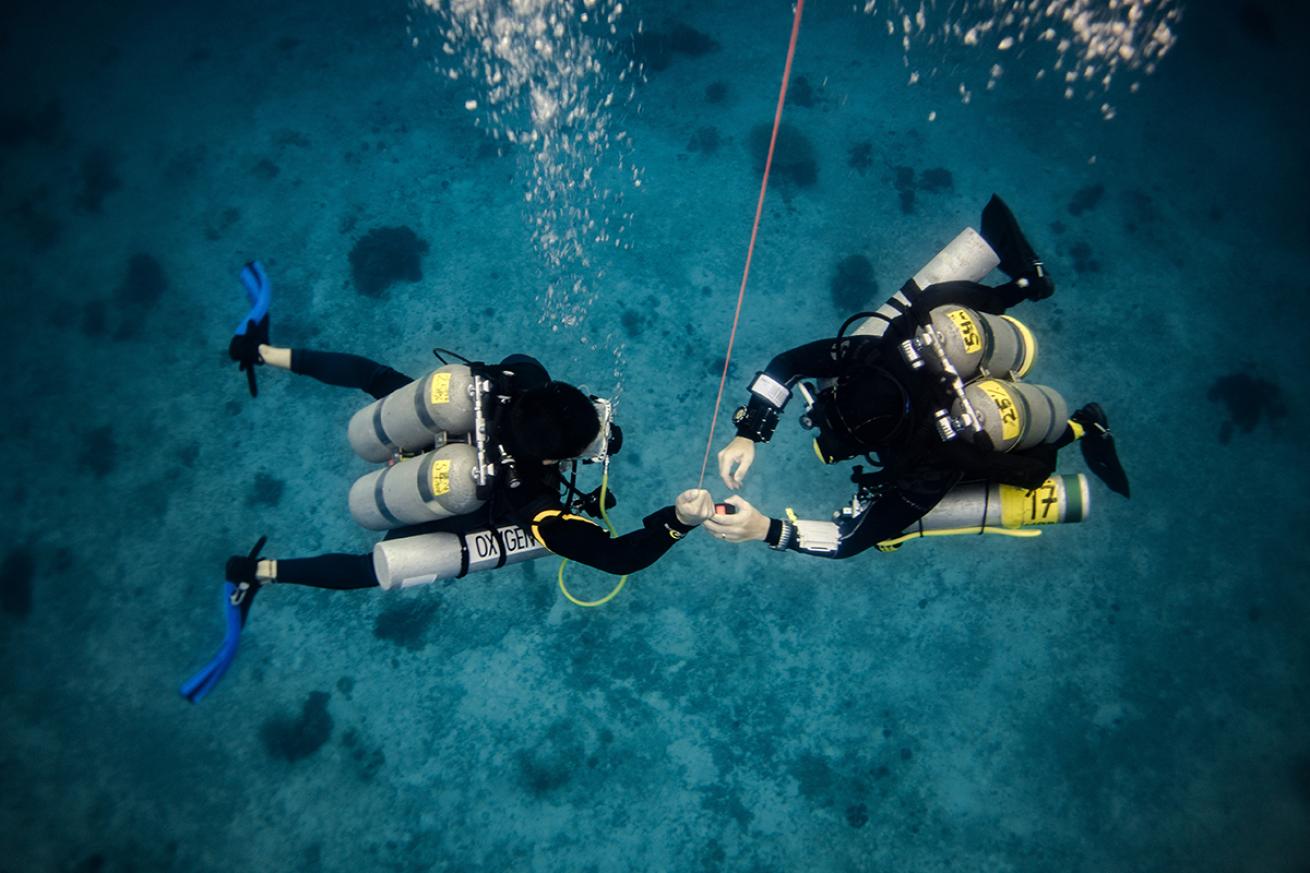
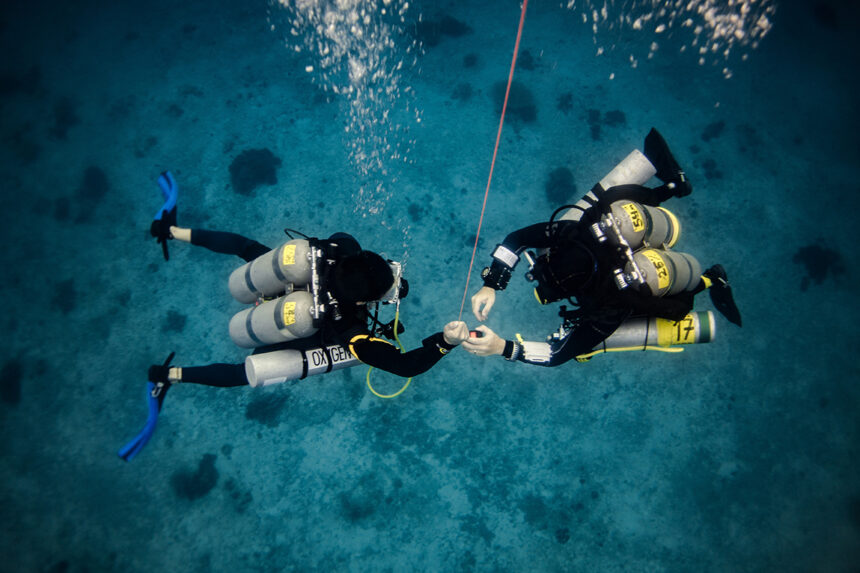
- 100–200 metres: Deep technical diving using Closed-Circuit Rebreathers (CCR). The domain of cave and deep wreck exploration specialists. Requires years of progressive technical training.
- 200–332 metres: World record territory — the extreme edge of human capability underwater.
The Deepest Scuba Dive in History
The world record for the deepest scuba dive is held by Ahmed Gabr of Egypt, who descended to 332.35 metres (1,090 feet) in the Red Sea on September 18, 2014. This record stands as of 2026.
His descent took approximately 12 minutes. His ascent — with mandatory decompression stops at multiple depth intervals — took 15 hours and 35 minutes. Gabr breathed a specialised Trimix gas blend through a rebreather system. The dive required years of meticulous preparation, a 100-person support team, and extremely precise decompression planning.
What Happens to the Human Body at Extreme Depth
At depths beyond 60 metres, several physiological challenges arise simultaneously:
- Oxygen toxicity: Oxygen becomes toxic at partial pressures above 1.4 bar — which occurs at approximately 57 metres breathing normal air. Technical divers use gas blends to manage this.
- High-Pressure Nervous Syndrome (HPNS): Below approximately 150 metres, tremors and loss of coordination can occur due to extreme pressure effects on the nervous system.
- Increased gas density: At extreme depths, breathing resistance increases dramatically as gas becomes denser, making each breath an effort.
- Thermal protection: Even in warm equatorial seas, extreme depths involve significantly colder water requiring serious insulation.
How Deep Do You Actually Dive on a Typical Holiday?
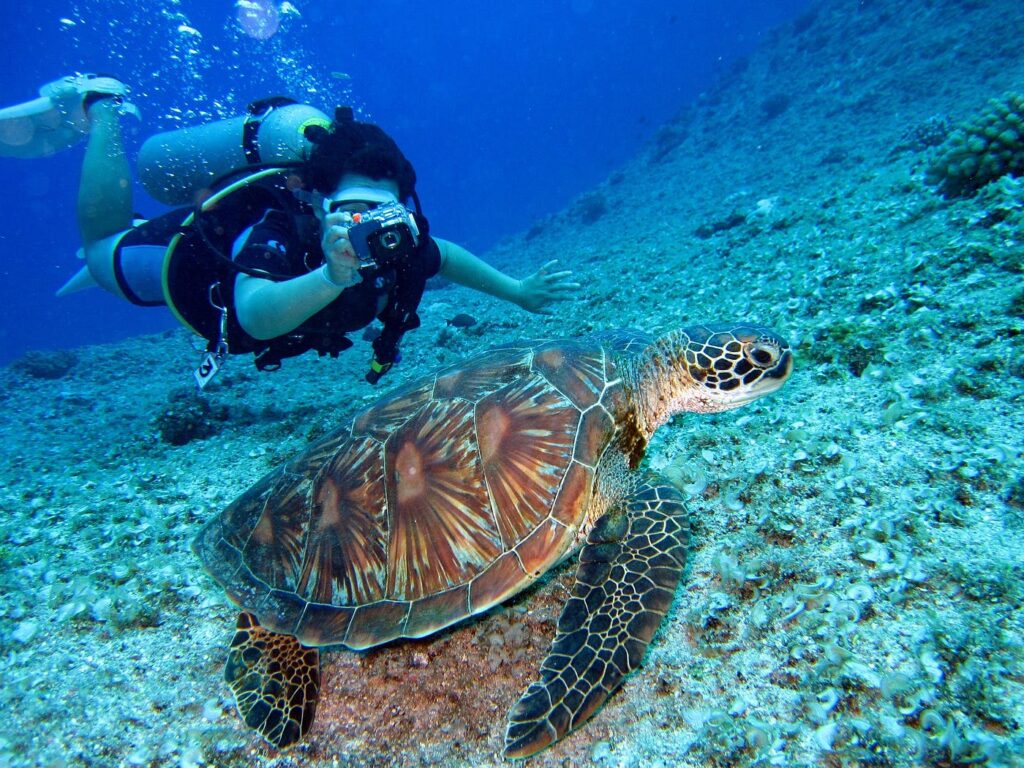
Despite the dramatic depth records above, most of the world’s greatest diving happens in the recreational range — and much of it in surprisingly shallow water:
- Coral reefs (peak biodiversity): 3–25 metres — most tropical reef life is concentrated here
- Wreck diving (most recreational wrecks): 10–30 metres — accessible to Advanced Open Water divers
- Manta ray cleaning stations: 5–20 metres — mantas prefer shallower cleaning stations
- Whale shark encounters: 0–20 metres — filter feeding near the surface
- Wall dives (most dramatic sections): 10–35 metres — the iconic overhangs and coral walls
📊 STAT: Truth: the ‘wow factor’ in scuba diving has almost nothing to do with depth. Some of the most spectacular dives in the world happen in less than 12 metres of water.
Depth vs Certification: Quick Reference
- Open Water certified: Dive comfortably to 18–20 metres
- Advanced Open Water certified: Dive to 30 metres
- Deep Diver Specialty: Dive to 40 metres (recreational maximum)
- Technical certifications (TDI/IANTD): 40–100+ metres with appropriate gas management
- Rebreather + advanced tech: 100–330 metres (extreme technical / world record territory)
CONCLUSION
As a recreational Open Water diver, your world is 0–20 metres — and it is an extraordinary world. Advanced certification unlocks 30 metres, and the Deep Diver specialty unlocks 40 metres — the recreational limit. Beyond that lies technical diving: a parallel universe of specialist training, gas blending, and rebreather technology that takes years to master responsibly. Most recreational divers never need or want to go there. Dive the depth that matches your training. The best dive you’ll ever do isn’t the deepest — it’s the one where everything comes together: perfect buoyancy, great visibility, and something unexpected swimming past your mask.