When you are 40 feet below the surface surrounded by the hum of the ocean, you cannot exactly turn to your dive buddy and say ‘hey, did you see that sea turtle?’ The only way to communicate underwater is through scuba diving hand signals, and knowing them well is not just useful — it is a core safety skill that every diver must have before entering the water.
Whether you are getting ready for your first open water course or you just want to refresh your knowledge, this guide covers every essential hand signal you need to know, what they mean, and how to use them correctly.
Why Scuba Diving Hand Signals Matter
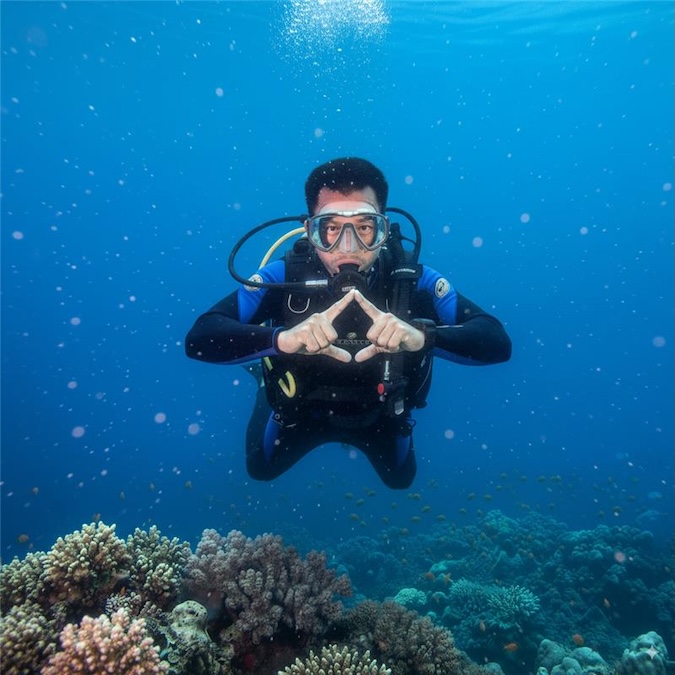
Scuba gear does not come with a built-in microphone and speaker system. Even the most modern diving setups do not allow normal spoken conversation underwater. This means every piece of information you need to share with your buddy — from ‘I am okay’ to ‘I am running low on air’ to ‘there is a shark over there’ — must be communicated silently through your hands.
Getting hand signals wrong can have serious consequences. Imagine your buddy showing you the ‘something is wrong’ signal and you interpret it as ‘okay.’ That misunderstanding could delay a critical response. Practising these signals before every dive until they become second nature is one of the most important habits you can build as a diver.
The Most Important Scuba Diving Hand Signals You Must Know
The OK Signal
This is the most used signal in diving. To show that you are okay, make a circle with your thumb and index finger while holding your three remaining fingers straight up. When asked if you are okay from a distance, you can also hold your entire hand flat and make a circle motion above your head. Both versions mean the same thing: all is well.
It is worth noting that a thumbs up does NOT mean okay in scuba diving. A thumbs up specifically means ‘I am going up’ or ‘end the dive.’ This is one of the most common misunderstandings new divers have, so commit it to memory from day one.
The Not OK or Something Is Wrong Signal
Hold your hand flat and rock it side to side, like a wobbly seesaw. This signal means something is not quite right. It could be an equipment issue, a feeling of discomfort, or confusion. When you see this signal from your buddy, stop what you are doing, give them your full attention, and try to identify what the problem is.
The Go Up Signal
Point your thumb upward. This is the universally recognised signal to ascend. It is used both to signal the end of a planned dive and in emergency situations when someone needs to surface quickly. Always ascend slowly when you see or give this signal — never rush to the surface.
The Go Down Signal
The opposite of the go up signal. Point your thumb downward to signal that it is time to descend or to go deeper. This is commonly used at the beginning of a dive when the group is ready to go under.
The Low on Air Signal
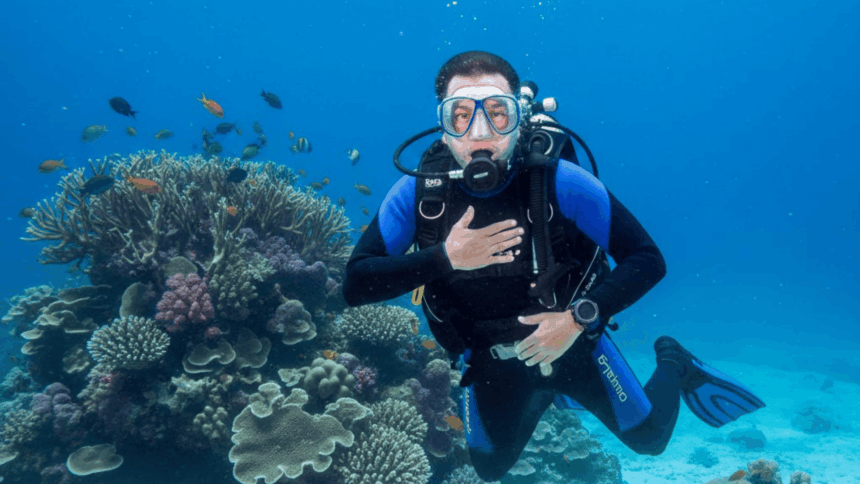
Make a fist and tap it firmly on your chest, right over your heart. This means your air supply is getting low. Most training agencies teach divers to give this signal when their tank reaches around 700 to 1,000 psi. Do not wait until you are completely empty before telling your buddy.
The Out of Air Signal
Slide your flat hand back and forth across your throat, like a cutting motion. This is an emergency signal meaning you have no air left and need to share your buddy’s alternate air source immediately. This signal requires an immediate, calm response from your buddy.
The Look at Me Signal
Point two fingers toward your own eyes. This tells your buddy to focus on you because you have something important to show or communicate. It is a good signal to use before giving another signal to make sure you have their full attention.
The Look Over There Signal
Point your index finger in the direction you want your buddy to look. This is used to point out marine life, a change in direction, an interesting feature, or a potential hazard.
The Equalising Signal
Pinch your nose with your fingers while your regulator stays in your mouth. This signals that you are having trouble equalising pressure in your ears. If you cannot equalise, you should never force a descent. Ascend slightly, wait, try again gently.
The Buddy Up Signal
Cross your index fingers in front of you. This means ‘stay close to me’ or ‘pair up.’ It is used to signal that divers should get closer together, which is especially important when visibility is low or when approaching a current.
Torch Signals for Night Dives
During a night dive, hand signals alone are hard to see. Divers use underwater torches to communicate. Slowly moving your torch in a wide circle means ‘okay.’ Moving it rapidly side to side means ‘not okay’ or ‘come to me immediately.’ Pointing your torch in a direction means ‘look that way.’ These torch signals complement standard hand signals and are essential for safe night diving.
Tips for Practising Scuba Hand Signals
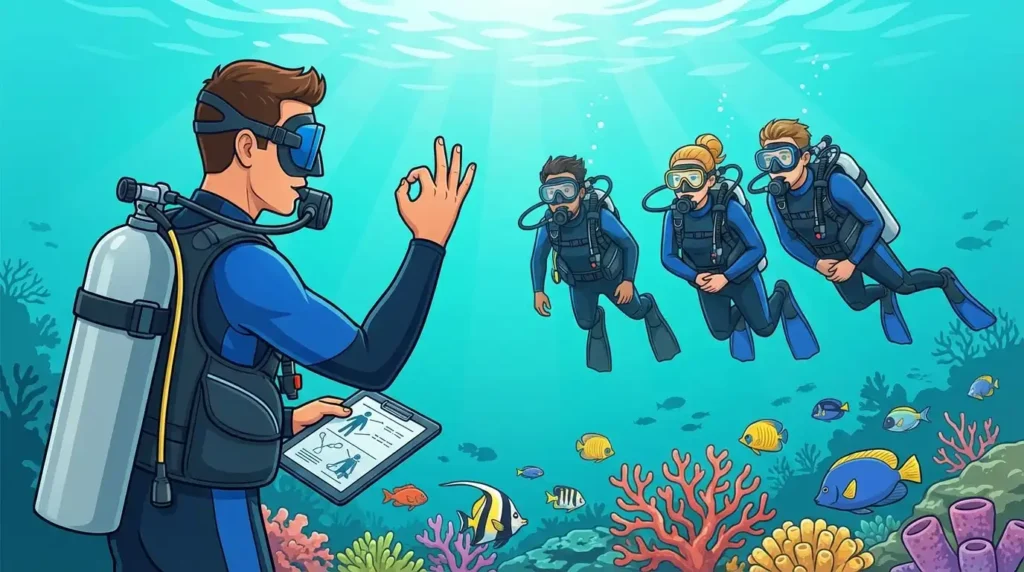
The best time to practise hand signals is before you even get in the water. Go through them with your buddy during your pre-dive briefing on the boat or at the shore. Make sure you both agree on any additional signals you plan to use, especially for specific marine life or local dive conditions.
Many dive instructors suggest practising signals in the mirror at home. It might feel silly but it genuinely helps you remember them when it matters most. You can also quiz yourself by downloading a dive signal chart and testing yourself before a dive trip.
To prepare fully for your dives, also make sure you understand your equipment. Our scuba tank weight chart can help you understand what you will be carrying on your back, which affects how you move and communicate underwater.
Are Hand Signals Universal?
Most of the core hand signals used in scuba diving are standardised across major training agencies like PADI, SSI, and NAUI. However, some signals can vary by region or by dive operator. If you are diving with a new group, a new instructor, or in a foreign country, always do a full signal review before the dive. Never assume that everyone uses exactly the same signals you learned.
Start Every Dive With a Signal Check
Make it a personal rule to run through all key hand signals with your buddy before every single dive. This takes less than two minutes and can make a huge difference in how smoothly and safely the dive goes. Great divers are not great because they never have problems — they are great because they communicate well when problems arise.
Want to keep learning? Visit Scoobadive Guide for more beginner-friendly scuba guides, gear reviews, and dive destination tips written for divers at every level.
Frequently Asked Questions
What does a thumbs up mean in scuba diving?
A thumbs up in scuba diving means ‘I am going up’ or ‘end the dive now.’ It does not mean okay. This is one of the most important things new divers must unlearn from everyday life. The OK signal in scuba is made by forming a circle with the thumb and index finger.
How many hand signals do I need to know for my open water course?
Your open water course will teach you around 15 to 20 essential hand signals covering safety, navigation, and communication. These include OK, not OK, go up, go down, low on air, out of air, equalising, and several others. Knowing all of them thoroughly before your first dive is strongly recommended.
Can I use underwater slates instead of hand signals?
Yes, many divers carry small underwater writing slates for more complex communication. These are especially useful for dive guides leading groups, underwater photographers, or technical divers. However, hand signals remain the primary and fastest form of underwater communication and should never be replaced entirely.
What should I do if I do not understand my buddy’s signal?
Stop, make the ‘not okay’ signal, and point to your head to indicate you do not understand. Never nod as if you understood when you did not. If needed, surface together calmly to clarify. Confusion underwater can escalate quickly so always ask for clarity rather than guessing.
Are there hand signals for specific fish or marine animals?
Yes, many experienced divers and dive guides use locally common signals for marine life. For example, a hand waving side to side like a fin typically means shark. Wiggling fingers downward can mean jellyfish. These are not universally standardised, so your guide or local dive operator will usually demonstrate them during the pre-dive briefing.
Final Thoughts
Scuba diving hand signals are one of those things that seem simple but can make an enormous difference in how safe and enjoyable your dives are. Take the time to learn every signal properly, practise them before every dive, and never be too proud to ask a buddy to repeat a signal you did not catch. The ocean is a beautiful place, and communicating well is how you make sure everyone comes back up happy and safe.