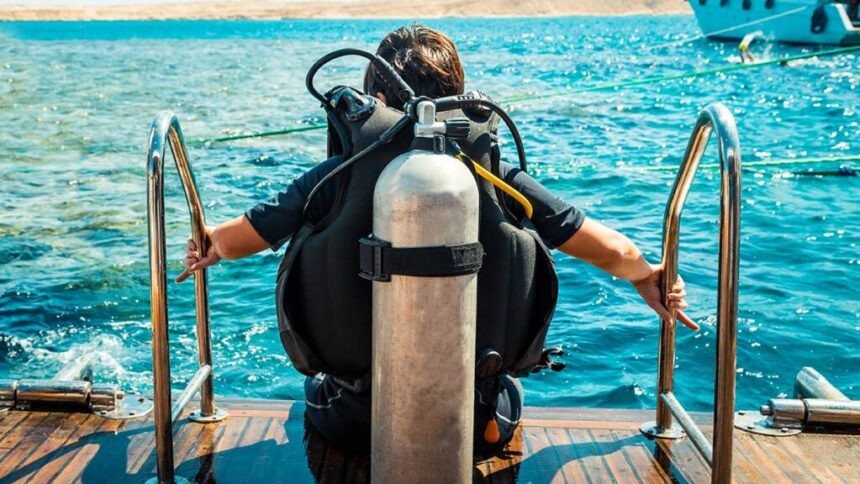
If you have ever thought about going scuba diving or are already a certified diver, one question that almost always comes up is — how heavy is a scuba tank? It sounds like a simple question, but the answer depends on a few important things like the type of tank, what it is made of, and whether it is full or empty. Understanding scuba tank weight can help you plan your dive better, pack smarter for a dive trip, and stay safe underwater.
- Why Does Scuba Tank Weight Even Matter?
- What Is the Average Weight of a Scuba Tank?
- Aluminum Tanks vs Steel Tanks: What Is the Weight Difference?
- How Does Tank Size Affect Weight?
- How Much Does a Scuba Tank Weigh Underwater vs on Land?
- What About Pony Bottles and Specialty Tanks?
- How to Safely Lift and Carry a Scuba Tank
- Scuba Tank Weight and Air Travel: What You Need to Know
- Choosing the Right Tank Weight for Your Body Type
- Frequently Asked Questions About Scuba Tank Weight
- Final Thoughts: Knowing Your Gear Makes You a Better Diver
In this complete guide, we will break down everything you need to know about scuba tank weight in plain, simple language. Whether you are a total beginner or an experienced diver looking to brush up on your gear knowledge, this article has got you covered. Let us get started.
Why Does Scuba Tank Weight Even Matter?
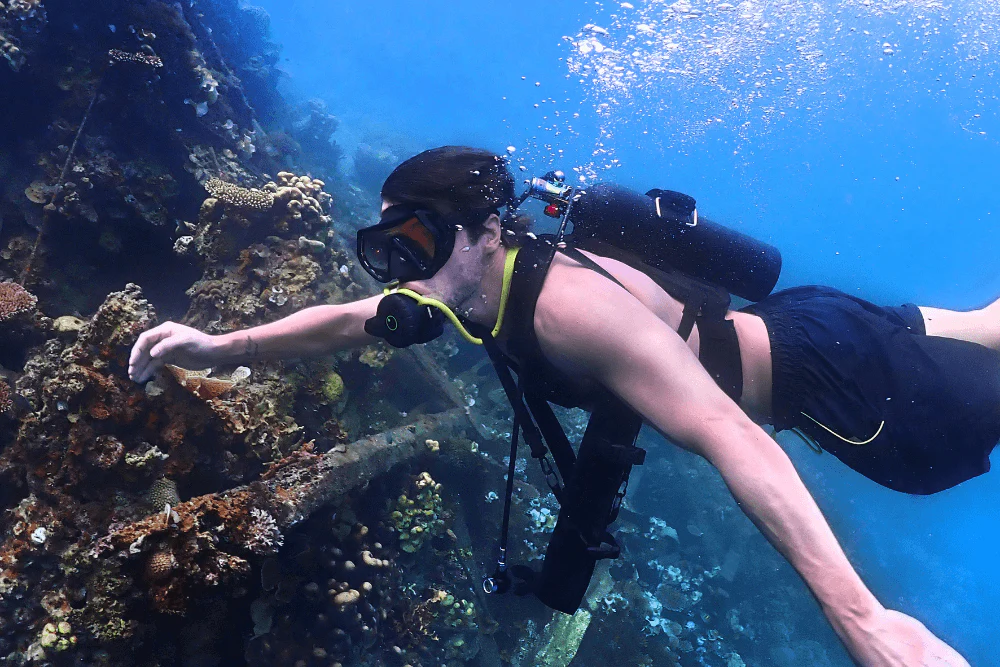
Before we get into numbers, let us talk about why knowing the weight of your scuba tank is actually important. First, it affects how you move underwater. A heavier tank can change your buoyancy, which means you might need to adjust how much weight you carry on your weight belt. Second, it matters when you are transporting your gear. Lifting a heavy tank incorrectly can cause a back injury, and knowing the weight in advance helps you prepare.
Third, if you are flying to a dive destination, airlines have strict baggage weight limits. Knowing how much your tank weighs helps you plan what else you can pack. And finally, if you are diving solo or helping someone else, understanding tank weight helps you handle gear safely on the boat or at the dive site.
What Is the Average Weight of a Scuba Tank?
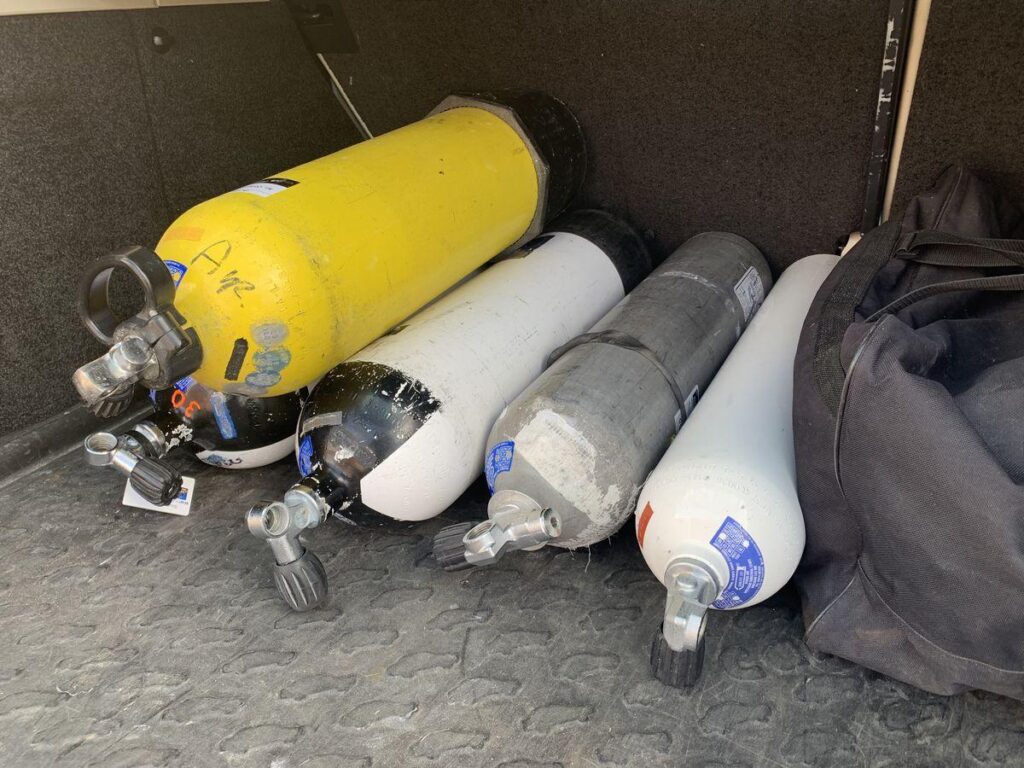
The average scuba tank weighs somewhere between 26 and 40 pounds when it is full. But that range is quite wide, so let us break it down more clearly. The most commonly used scuba tank in recreational diving is the aluminum 80 cubic foot (AL80) tank. This tank weighs about 31.5 pounds when it is empty and around 35 pounds when it is completely full of compressed air.
Steel tanks are a different story. A standard steel 80 cubic foot tank weighs about 28 to 30 pounds empty, and closer to 32 to 36 pounds when full. Steel tanks are generally heavier than aluminum tanks of the same size, but they are more compact and negatively buoyant, which can reduce how much extra weight you need to wear on your belt.
For a quick visual comparison of different tank types and their weights, be sure to check out this detailed scuba tank weight chart on Scooba Dive Guide — it breaks down weights by material, size, and fill level in one easy-to-read table.
Aluminum Tanks vs Steel Tanks: What Is the Weight Difference?
One of the biggest decisions new divers face is whether to go with an aluminum or steel tank. Weight is a huge factor in that decision, so let us look at this in detail.
Aluminum tanks are the most popular choice at dive shops and rental centers around the world. They are affordable, widely available, and easy to maintain. However, aluminum is a softer metal, so the walls of an aluminum tank need to be thicker to hold the same amount of pressure. This makes aluminum tanks slightly bulkier and heavier for their capacity compared to steel tanks.
The other important thing about aluminum tanks is how they behave underwater. An aluminum AL80 tank starts off slightly negatively buoyant when full, but becomes positively buoyant as you use up the air inside. That means at the end of your dive, an empty aluminum tank actually wants to float up. This is why divers using aluminum tanks often need to carry more lead weight to compensate.
Steel tanks, on the other hand, stay negatively buoyant throughout the dive — even when empty. This is a big advantage because you need less extra weight on your belt, which can make your diving more comfortable. Steel tanks are also more durable and last longer. The downside is that they cost more upfront and can be harder to find at rental shops in certain locations.
How Does Tank Size Affect Weight?
Scuba tanks come in different sizes, usually measured in cubic feet or liters. The size of the tank directly affects how much it weighs. Here is a simple breakdown of common tank sizes and their typical weights:
The AL63 aluminum tank holds 63 cubic feet of air and weighs about 26 pounds when full. It is lighter and shorter than the AL80, making it a popular choice for smaller divers, kids, and shorter dives. The AL80 is the standard recreational dive tank and weighs about 35 pounds full, as mentioned above. The AL100 is a larger tank that can hold 100 cubic feet of air and weighs around 40 pounds when full — significantly heavier, but it gives you more bottom time.
On the steel side, a steel 72 cubic foot tank weighs about 30 to 31 pounds full, while the popular HP100 (high pressure 100 cubic foot) steel tank weighs close to 37 to 40 pounds when full. Technical divers often use double tanks, also called twins, which can collectively weigh 60 to 80 pounds or more. These are not typically used in recreational diving but are standard for deeper, longer dives.
How Much Does a Scuba Tank Weigh Underwater vs on Land?

Here is something interesting that surprises many new divers: a scuba tank feels much lighter underwater than it does on land. That is because of buoyancy — when you submerge any object in water, the water pushes back against it, effectively reducing the feeling of weight.
An aluminum AL80 tank that weighs 35 pounds on land might only feel like it has an apparent weight of around 1 to 2 pounds underwater when full — or even slightly buoyant when empty. This is why buoyancy control is such an important skill in scuba diving. Your tank weight on land does not directly tell you how you will feel underwater. What matters more is the net buoyancy of the tank, which accounts for the water it displaces.
Steel tanks tend to be negatively buoyant by about 2 to 4 pounds underwater, even when empty. Aluminum tanks, as we mentioned, can shift from slightly negative to slightly positive buoyancy as the air is used up. This difference plays a huge role in how much weight you need to wear during a dive.
What About Pony Bottles and Specialty Tanks?
Beyond the standard recreational tanks, divers also use pony bottles and specialty tanks for specific situations. A pony bottle is a small backup air supply that divers carry in case of an emergency. These tiny tanks usually hold between 6 and 40 cubic feet of air and can weigh as little as 3 pounds for the smallest sizes, up to about 12 to 15 pounds for larger ones.
Nitrox tanks, which contain a higher percentage of oxygen than regular air, weigh the same as standard tanks of the same size and material. The gas mixture inside does not significantly change the overall weight. Similarly, oxygen tanks used for surface decompression in technical diving follow the same weight rules based on size and material.
Some divers also use sidemount configurations, where they carry one or two tanks attached to their sides rather than their back. This is popular in cave diving and technical diving. The tanks used in sidemount setups are usually standard sizes, so their individual weights remain the same — you just carry them differently.
How to Safely Lift and Carry a Scuba Tank
Knowing the weight of your tank is one thing — knowing how to handle it safely is another. Scuba tanks are heavy, cylindrical, and can roll or fall easily. Every year, divers and dive shop workers get injured from improper tank handling. Here are some practical tips to stay safe.
Always use your legs, not your back, when lifting a scuba tank off the ground. Bend your knees, keep the tank close to your body, and stand up slowly. Never jerk a heavy tank upward in a hurry. When carrying a tank horizontally, make sure the valve end is pointing away from people in case the valve is bumped and air escapes suddenly.
On a boat, always keep tanks secured in tank holders or strapped down so they cannot roll around as the boat moves. A loose tank on a rocking boat is extremely dangerous. When mounting a tank into a BCD on a dive boat, it helps to have someone hold the BCD while you secure the tank, especially if the boat is moving.
If you are at a dive resort and someone offers to carry your tank for you, let them — that is what the dive staff is there for. But if you are handling your own gear, take your time and be careful. Your back will thank you after a long week of diving.
Scuba Tank Weight and Air Travel: What You Need to Know
If you are planning a liveaboard trip or flying to an international dive destination, you might be wondering whether you can bring your own scuba tank on a plane. The answer is yes — but with conditions.
Airlines typically allow scuba tanks in checked baggage as long as the valve is completely removed or left open to prove the tank is empty. An empty scuba tank weighs between 26 and 35 pounds depending on the type, which may eat into your checked baggage weight allowance quickly. Most airlines allow 50 pounds per checked bag, so a large steel tank by itself could take up most of that limit.
Many experienced dive travelers leave their tanks at home and rent them at their destination instead. Rental tanks are almost always available at dive resorts and liveaboards, and renting saves you the hassle and baggage fees. However, if you are picky about your equipment or diving somewhere remote with limited rental options, bringing your own tank may be worth the extra effort and cost.
Interestingly, this concept of safety equipment in extreme sports is something that matters in skydiving too. Just like understanding how much a scuba tank weighs helps divers stay safe and comfortable, knowing how parachute systems work is critical for skydivers. If you are curious about how emergency systems work in extreme sports, this article on how many people can survive with one parachute offers a fascinating look at safety protocols in another high-adrenaline sport.
Choosing the Right Tank Weight for Your Body Type
Not every tank is a good fit for every diver. Your height, weight, lung capacity, and diving style all play a role in choosing the right tank size and material. Smaller divers and those with lower air consumption often do very well with an AL63 or even a smaller steel tank. They do not need as much air for the same bottom time, and a lighter tank is easier to handle on land.
Larger divers with higher air consumption might prefer the AL80 or a large capacity steel tank to make sure they have enough air for the dive. If you find yourself always running low on air before your dive buddy, moving up to a larger tank could be the solution.
Women divers, in particular, often find that smaller tanks are a better physical fit. The AL63 is specifically popular among female recreational divers because it is shorter and lighter, reducing strain on the neck and shoulders when gearing up and walking to the water entry point. Dive shops and instructors can help you figure out the best tank size for your specific body and breathing patterns.
Frequently Asked Questions About Scuba Tank Weight
How much does an empty scuba tank weigh?
An empty aluminum AL80 scuba tank weighs about 31.5 pounds. An empty steel 72 tank weighs around 28 to 30 pounds. The empty weight varies based on the material and size of the tank. Steel tanks are generally heavier empty but more compact than aluminum tanks of the same capacity.
How much does a full scuba tank weigh?
A full aluminum AL80 tank weighs approximately 35 pounds. A full steel HP100 tank can weigh up to 40 pounds. The added weight when a tank is full comes from the compressed air or gas inside, which typically adds 3 to 6 pounds depending on the tank size and fill pressure.
Is a scuba tank heavy to carry?
On land, yes — scuba tanks are heavy and can be awkward to carry due to their cylindrical shape. However, underwater they become much easier to manage thanks to buoyancy. A proper diving setup with the right amount of weight compensation means the tank feels nearly neutral underwater.
Which scuba tank is lightest?
The lightest recreational scuba tanks are small aluminum tanks like the AL40 or AL50, which can weigh as little as 18 to 22 pounds full. Carbon fiber tanks are the lightest option available but are much more expensive. For everyday recreational diving, the AL63 is a popular lightweight choice that still offers enough air for most dives.
Can a beginner carry their own scuba tank?
Yes, beginners can absolutely carry their own scuba tank. The key is learning proper lifting technique and not rushing. Many dive sites have staff to assist with heavy gear, and as you build experience, handling a tank becomes second nature. Starting with a smaller tank like the AL63 can make things easier for new divers.
Does tank weight affect how much weight I need on my belt?
Yes, it does. Because steel tanks are negatively buoyant throughout the dive, divers using steel tanks typically need less weight on their belt compared to those using aluminum tanks. Aluminum tanks become positively buoyant when empty, so divers compensate by wearing more lead weight. Always do a buoyancy check with your specific tank before diving in unfamiliar conditions.
Final Thoughts: Knowing Your Gear Makes You a Better Diver
Understanding scuba tank weight is not just a trivia question — it is practical knowledge that makes you a safer and more confident diver. From choosing the right tank for your body size to handling gear correctly on a boat, weight awareness is part of being a well-prepared diver.
Whether you are renting an AL80 at your local dive shop or investing in your own steel tank for serious diving, knowing what you are working with gives you an edge. It helps you plan your buoyancy setup, protect your back, manage travel logistics, and get the most out of every dive.
Ready to learn more about scuba gear, dive planning, and everything underwater? Explore more expert guides and tips over at Scooba Dive Guide — your go-to resource for all things scuba. Whether you are just getting your open water certification or planning your fiftieth dive trip, there is always something new to discover beneath the surface.