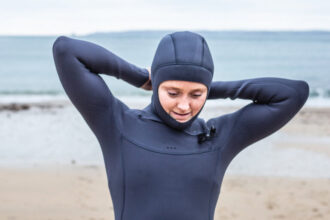
If you are new to scuba diving, the weight belt might not be the first piece of gear that comes to mind. You are probably thinking about the mask, the tank, the fins, and the regulator. But here is the truth — your weight belt is one of the most important pieces of equipment you will ever wear underwater. Getting it wrong can make your dive uncomfortable, frustrating, or even unsafe. Getting it right means smooth, effortless dives where you glide through the water like you were born there.
- Why Do Scuba Divers Need a Weight Belt?
- Types of Scuba Diving Weight Belts Explained
- How Much Weight Do You Actually Need?
- How to Wear a Scuba Weight Belt Properly
- The Buoyancy Check: A Step Every Beginner Must Do
- Common Weight Belt Mistakes Beginners Make
- Caring for Your Scuba Weight Belt
- Frequently Asked Questions About Scuba Weight Belts
- How much weight should a beginner scuba diver wear on a weight belt?
- Where should a scuba weight belt sit on your body?
- What is the difference between a weight belt and integrated weights in a BCD?
- Can you dive without a weight belt?
- How do I know if I am overweighted when scuba diving?
- How do I clean and care for my scuba weight belt?
- What type of weight belt is best for beginners?
This scuba diving weight belt guide for beginners will walk you through everything you need to know in plain, simple language. From understanding why you even need a weight belt, to choosing the right type, wearing it correctly, and knowing how much weight to actually use — we have got it all covered here.
Want to learn more about your dive gear? Check out our scuba tank weight chart to understand how your tank weight affects your buoyancy before you even hit the water.
Why Do Scuba Divers Need a Weight Belt?
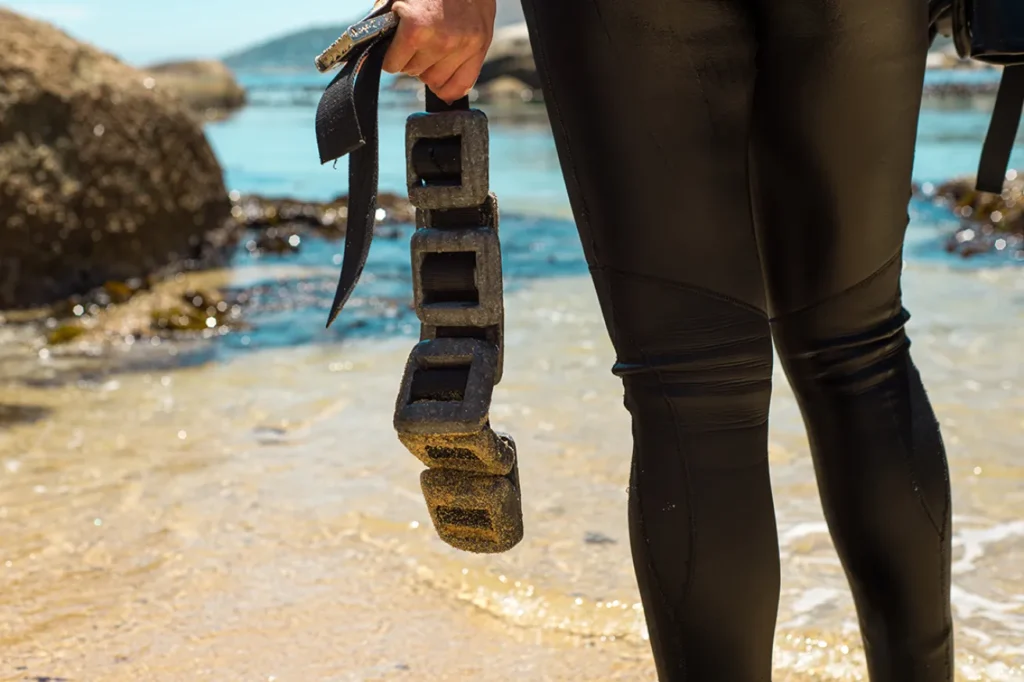
Your body is naturally buoyant. So is your wetsuit. When you put on a thick 5mm or 7mm wetsuit and jump into the ocean, your body and the neoprene try to float you right back to the surface. That is great for swimming, but terrible for scuba diving. To sink down and explore the underwater world, you need to overcome that positive buoyancy. That is where the weight belt comes in.
A scuba diving weight belt adds just enough weight to your body so that you can achieve what divers call neutral buoyancy. Neutral buoyancy means you are neither sinking nor floating. You simply hover in the water at whatever depth you choose, like an astronaut floating in space. It is one of the most satisfying feelings in all of diving, and the weight belt is a big reason it is possible.
Without the right amount of weight, you will spend your entire dive fighting to stay down, wasting energy and burning through your air supply much faster than you should. Too much weight, on the other hand, will have you sinking too fast and struggling to stay off the coral or the sandy bottom. Balance is everything in scuba diving, and the weight belt helps you find it.
Types of Scuba Diving Weight Belts Explained
Not all weight belts are the same. When you walk into a dive shop or browse gear online, you will find several different styles. Each one has its own strengths, and understanding the differences will help you pick the right one for your diving style and body type.
Nylon Webbing Weight Belts
This is the most common and most affordable type of weight belt you will find. It is basically a flat nylon strap that you thread your lead weights onto. Nylon webbing belts are simple, durable, and easy to use. Most beginner divers start with this style because it is widely available and budget-friendly. The downside is that nylon does not stretch, so as your wetsuit compresses during a dive and your waist gets a little thinner, the belt can feel a bit loose.
Rubber Weight Belts
Rubber weight belts solve the stretching problem that nylon belts have. Because rubber is elastic, the belt naturally compresses and expands with your wetsuit as you go deeper and shallower. This keeps the belt fitting snugly throughout the dive and means you do not need to keep adjusting it. Rubber belts are a favourite among more experienced divers and freedivers for exactly this reason.
Pocket-Style Weight Belts
Pocket belts have small pouches or pouches sewn into the belt where you can insert lead weights or soft shot bags. Many divers find these more comfortable because the weight is spread out more evenly and does not dig into your sides the way traditional block weights can. They are a great option if you find hard lead weights uncomfortable on your hips during a long dive.
Integrated Weight Systems in BCDs
Many modern BCDs (buoyancy control devices) come with built-in weight pockets so you do not need a separate weight belt at all. These integrated systems are very popular in recreational diving because they are convenient and often more comfortable. The weights sit inside the BCD rather than on a separate belt around your waist. However, a traditional weight belt is still useful to know about, especially when renting gear or diving in different locations around the world.
How Much Weight Do You Actually Need?
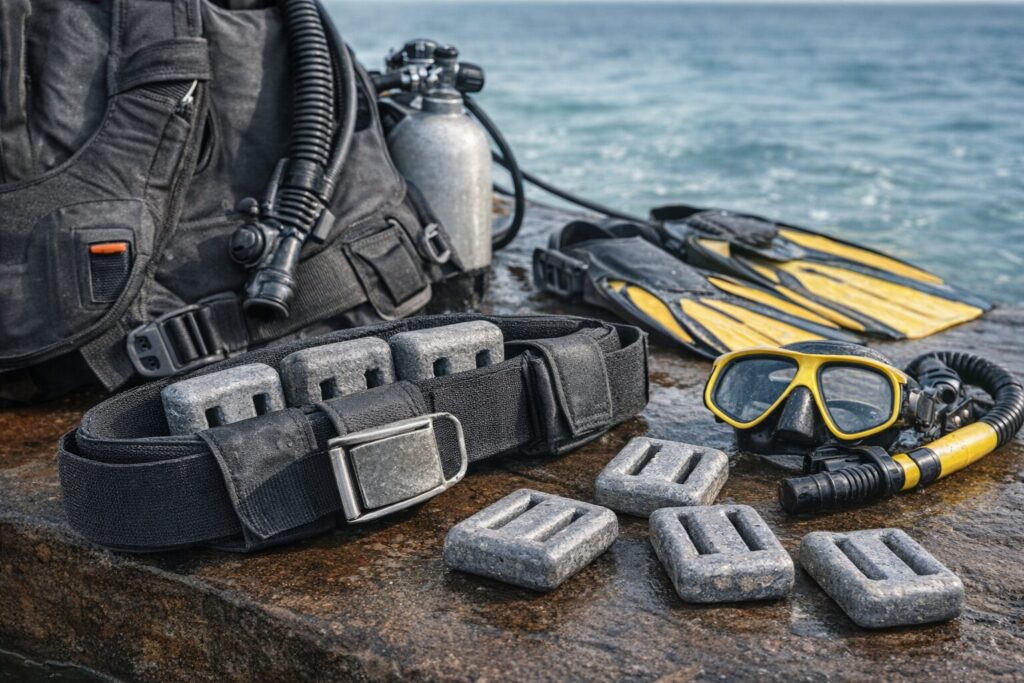
This is the question every beginner asks, and the honest answer is that it depends on several factors. Your body weight, the thickness of your wetsuit, whether you are diving in saltwater or freshwater, and the type of tank you are using all play a role in how much lead you need.
As a general starting point, many instructors suggest beginning with about 10% of your body weight in lead, then adjusting from there. For example, if you weigh 70 kg (about 154 lbs), you might start with around 7 kg of weight. However, this is just a rough guide and you should always do a buoyancy check in the water before your dive to fine-tune the amount. Saltwater is denser than freshwater, so you will typically need a little more weight when diving in the ocean compared to a lake or pool.
Wetsuit thickness matters a great deal too. A thin 3mm wetsuit adds less buoyancy than a thick 7mm suit, so you will need more weight with thicker neoprene. Some divers use the simple rule of adding roughly 1 kg of weight for every millimetre of wetsuit thickness as a starting reference, though personal body composition also plays a big role.
Your scuba tank also affects your overall weight needs. A full aluminium tank is heavier than a nearly empty one, and an aluminium tank behaves differently from a steel tank. If you want to understand exactly how your tank weight changes your buoyancy before and after a dive, our scuba tank weight chart breaks it down in a clear and easy way.
It is also worth knowing that weight requirements are similar in some ways to physical fitness requirements in adventure sports. Just like skydiving has weight limits for safety reasons, scuba diving has its own guidelines around buoyancy and weight management to keep every diver safe underwater.
How to Wear a Scuba Weight Belt Properly
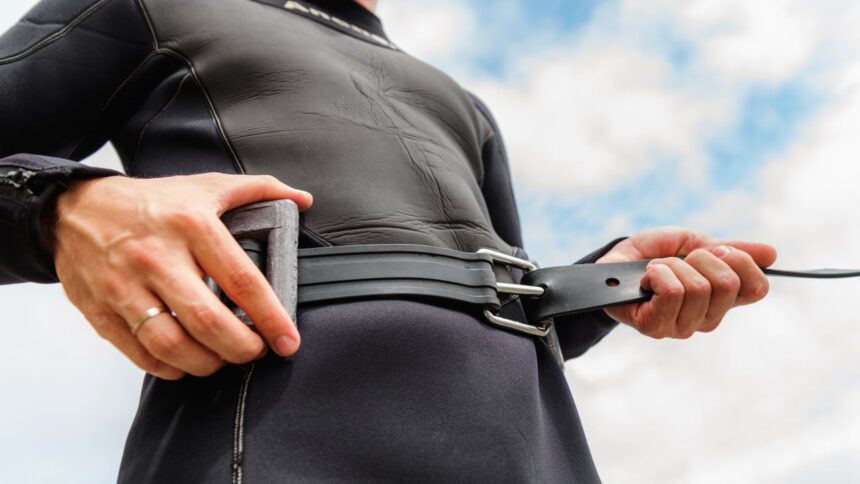
Putting on a weight belt sounds simple, but there are a few important things to get right. First, the belt should sit on your hips, just above your hip bones. It should not be sitting on your stomach or around your ribs. The hip position keeps the weight balanced and low, which helps maintain a good horizontal body position underwater.
The quick-release buckle is a critical safety feature. It should always be positioned at the front of your body, slightly to your right side if you are right-handed. This makes it easy for you or a buddy to grab it and release the belt in an emergency. In a situation where you need to drop your weights quickly and shoot to the surface, you need to be able to find and release that buckle in seconds without thinking about it.
Spread your weights as evenly as possible on both sides of the belt. If you have 8 kg of weight, try to have 4 kg on each side rather than all of it bunched together in one place. Even distribution helps you maintain a balanced, horizontal position in the water and reduces strain on your lower back during the dive.
After putting on the belt, do a quick check to make sure it is not too tight or too loose. You should be able to slide two fingers under the belt when standing on the surface, but it should feel snug enough that it will not slip down over your hips when you are underwater.
The Buoyancy Check: A Step Every Beginner Must Do
Before every dive, especially if you are using new gear or diving in a new location, you should do a buoyancy check at the surface. This is how you know if you have the right amount of weight before committing to the dive.
To do a buoyancy check, get in the water and deflate your BCD completely. Hold a normal breath and float upright. At eye level, the surface of the water should be around your mid-face. If you sink immediately, you have too much weight. If you float up so that most of your head is above water, you need more weight. When you exhale slowly, you should begin to sink gently. That is the sign that your weighting is close to perfect.
Taking the time to do this check at the start of a dive will save you a lot of frustration and air. It is a habit that even experienced divers keep, especially when using rental gear or diving with a new wetsuit.
Common Weight Belt Mistakes Beginners Make
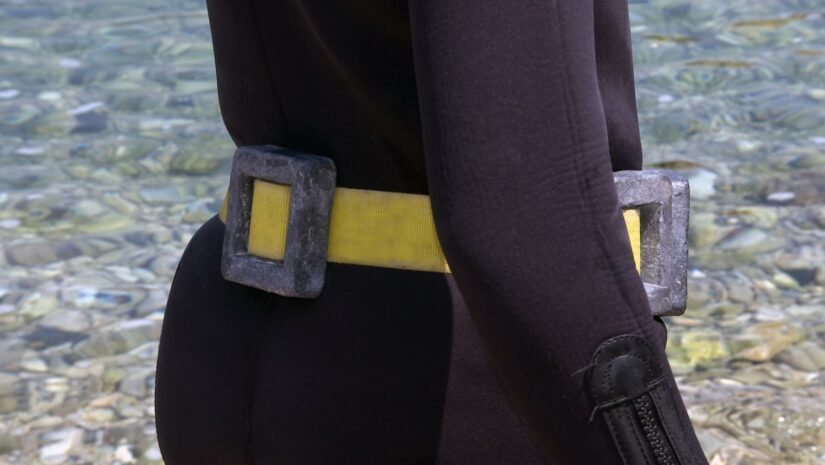
One of the most common mistakes new divers make is wearing too much weight. It feels safer to be heavier because you are sure you will sink, but it actually makes diving harder and less enjoyable. When you are overweighted, you have to add more air to your BCD to compensate, which makes buoyancy control messy and unpredictable. It also means you use more air overall.
Another mistake is wearing the belt too high on the waist. This causes the weights to sit in the wrong position, tilting your body so that your legs hang down and your head points upward underwater. This “head up, feet down” angle is inefficient and makes it much harder to swim smoothly.
Forgetting to check the quick-release buckle is also a surprisingly common oversight. Always make sure the buckle is properly locked before you enter the water, and practice finding and releasing it on land so that in a real emergency, your hands know exactly what to do.
Caring for Your Scuba Weight Belt
Saltwater is tough on dive gear. After every dive in the ocean, rinse your weight belt thoroughly with fresh water. This removes the salt that can corrode metal buckles, degrade nylon webbing, and cause rubber to dry out and crack over time. Give it a good shake and hang it somewhere with airflow to dry completely before storing it.
Check the buckle regularly for signs of rust, cracking, or stiffness. A buckle that sticks or is difficult to release is a safety risk and should be replaced before your next dive. Lead weights themselves do not need much care, but check them for cracks and make sure they sit securely on the belt without sliding around.
Store your belt in a cool, dry place out of direct sunlight. UV exposure can weaken nylon webbing over time. If you use a rubber belt, a very light coating of silicone spray can help keep the rubber supple and extend its life.
Ready to gear up for your next dive? Head over to ScoobaDiveGuide.com for more beginner-friendly guides, gear reviews, and expert tips to help you become a more confident diver.
Frequently Asked Questions About Scuba Weight Belts
How much weight should a beginner scuba diver wear on a weight belt?
A good starting point for most beginners is around 10% of their body weight in lead. So if you weigh 70 kg, begin with approximately 7 kg and adjust based on your buoyancy check in the water. Your wetsuit thickness, the type of water (salt or fresh), and your tank type will all influence the final amount.
Where should a scuba weight belt sit on your body?
Your weight belt should sit on your hips, just above the hip bones. It should not ride up around your stomach or fall down below the hips. The quick-release buckle should be positioned at the front, slightly to the right side for easy emergency access.
What is the difference between a weight belt and integrated weights in a BCD?
A traditional weight belt is a separate strap worn around your waist with lead weights attached. Integrated weight systems are built directly into the BCD with dedicated pockets. Both achieve the same goal of adding weight for buoyancy control. Integrated systems are often more comfortable, but traditional belts are widely available, especially when using rental gear.
Can you dive without a weight belt?
Some divers with very little body fat or those wearing minimal exposure suits may be able to dive without extra weight, but most people need some form of weighting to achieve neutral buoyancy. If your BCD has integrated weight pockets, you may not need a separate weight belt, but you will still need to add weight somewhere in your system.
How do I know if I am overweighted when scuba diving?
Signs of being overweighted include sinking too quickly when you deflate your BCD, having to add a lot of air to your BCD just to hover, and feeling like you are constantly fighting to stay off the bottom. If you notice any of these things, try removing 0.5 to 1 kg of weight and doing another buoyancy check before your next dive.
How do I clean and care for my scuba weight belt?
After every saltwater dive, rinse your weight belt thoroughly with fresh water, paying special attention to the buckle. Allow it to dry fully in a shaded, well-ventilated area before storing. Check the buckle before each dive and replace it immediately if it shows signs of corrosion or stiffness.
What type of weight belt is best for beginners?
A simple nylon webbing weight belt with a reliable quick-release buckle is the most accessible and affordable option for beginners. As you gain experience and develop personal preferences, you may want to explore rubber belts or pocket-style belts for added comfort and performance.