Lionfish hunting techniques have become an important topic for divers, ocean lovers, and marine conservation groups. Lionfish are beautiful to look at, but they are also one of the most dangerous invasive species in the Atlantic Ocean and the Caribbean Sea. Because they have no natural predators in these waters, lionfish grow in huge numbers and harm many native fish populations. This is why learning the best lionfish hunting techniques is not only a fun adventure but also an important way to protect the ocean.
- What Makes Lionfish Hunting Important
- Best Lionfish Hunting Techniques Every Diver Should Know
- Free-Diving and Scuba Spearfishing
- Invasive Lionfish Hunting Techniques for Beginners
- Lionfish Spearfishing in the Florida Keys
- How to Catch Lionfish With Rod and Reel
- Lionfish Hunting Jobs and Payment
- Lionfish Hunting Tours for Beginners and Experts
- Tips for Staying Safe While Hunting Lionfish
- Frequently Asked Questions
- Conclusion
If you love scuba diving or want to start your journey into underwater exploration, learning how to safely remove lionfish can give you a new and exciting experience. At Scoobadive Guide, we help divers discover new skills, find diving locations, and learn more about marine life. You can explore more underwater guides and diving tips on our main page at scoobadiveguide.com.
In this detailed article, you will learn the best lionfish hunting techniques, safe handling tips, recommended gear, and information about lionfish hunting tours, jobs, and Florida regulations. Everything is written in simple English so anyone can understand and follow along.
What Makes Lionfish Hunting Important
Lionfish were originally found only in the Indo-Pacific region. But due to accidental releases and fast reproduction, they spread across the Atlantic, Gulf of Mexico, and the Caribbean. One female lionfish can lay up to 30,000 eggs every few days. This means a small population can quickly turn into thousands of fish.
Lionfish eat young reef fish that keep coral reefs clean and healthy. Without these small fish, the coral reefs become weak and more likely to die. This is why lionfish spearfishing has become a respected conservation activity.
Removing lionfish helps rebuild reef health, improves fish populations, and supports balanced ecosystems. This has also created new opportunities for lionfish hunting tours, workshops, and even paid lionfish removal jobs.
Best Lionfish Hunting Techniques Every Diver Should Know
Learning lionfish hunting techniques is easier than many people think. Lionfish are slow, they do not get scared easily, and they allow divers to come close. However, their venomous spines make safety the most important part of the hunt.
Here are the most effective techniques used today.
Free-Diving and Scuba Spearfishing
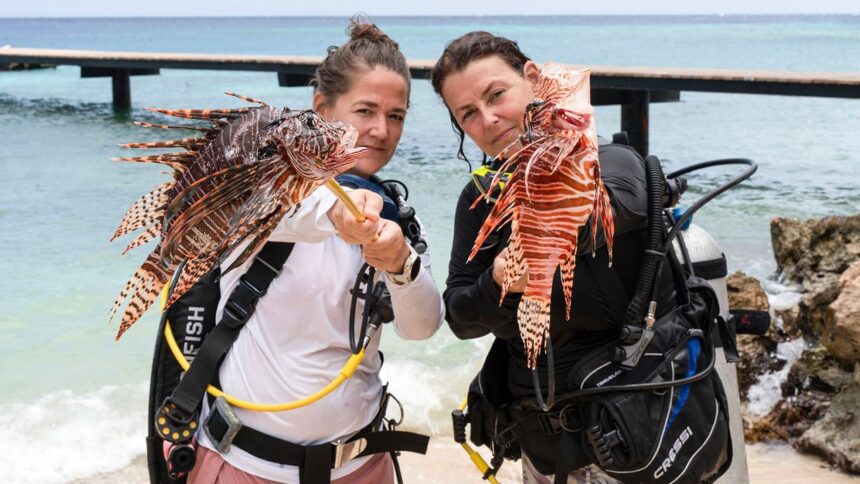
Spearfishing is the most common and effective lionfish hunting technique. Divers use a pole spear or a Hawaiian sling because they are simple, safe, and easy to use underwater. Since lionfish do not move fast, divers do not need complicated gear.
The basic method is to slowly approach the lionfish from behind or from the side. Lionfish often stay still near rocks, coral, or wrecks. Once the diver gets close, a single strong thrust with the pole spear will catch the fish. The diver then places the lionfish into a special container designed for safe storage.
This technique is commonly used on lionfish hunting tours in many places, especially in the Caribbean and the Florida Keys.
Invasive Lionfish Hunting Techniques for Beginners
Beginners should start with simple and safe methods. The easiest technique is slow and careful movement. Lionfish become alert only when they feel fast or sudden movements. If you move slowly, they will stay calm, giving you more time.
Another beginner-friendly technique is approaching lionfish when they are upside down or feeding. During these moments, they are distracted and less likely to swim away.
Many diving instructors tell beginners to practice holding the spear in a comfortable position. Keeping your body calm and relaxed is important for accuracy and control. With time, this becomes a natural habit.
Lionfish Spearfishing in the Florida Keys
Florida is one of the most active areas for lionfish hunting. Many divers travel there just to learn the best lionfish spearfishing techniques. The Florida Keys, in particular, offer clear waters and a large population of lionfish.
Florida has special laws that allow spearfishing for lionfish without a fishing license when using certain tools. This is because removing lionfish helps protect native fish species. There are also events, competitions, and training sessions where divers can learn advanced hunting skills.
Many dive shops in Florida also offer guided lionfish hunting tours. These tours include equipment, training, and expert guidance.
How to Catch Lionfish With Rod and Reel
While most people use spears, some fishermen ask if rod and reel works for lionfish. The answer is yes, but it is less common. Lionfish usually stay close to the bottom and prefer still or slow-moving bait.
To catch lionfish with rod and reel, fishermen use small hooks and bait such as shrimp. The technique involves dropping the bait close to the reef and pulling up slowly. But compared to spearfishing, this method is less effective and takes more time.
Still, rod and reel fishing can be useful when diving is not possible or when fishing in deeper waters.
Lionfish Hunting Jobs and Payment
Because lionfish removal is important for ocean health, trained divers sometimes get paid to remove them. These jobs usually exist in marine research organizations, reef protection groups, and diving tour companies.
Lionfish hunting pay depends on the region and the project. Some places pay per fish collected, while others offer hourly payment. In certain islands, restaurants buy lionfish because it is safe and delicious to eat when cleaned properly. This creates extra income opportunities for divers.
The more skilled and safe a diver is, the better the opportunities in lionfish hunting jobs.
Lionfish Hunting Tours for Beginners and Experts
Lionfish hunting tours have become one of the most exciting diving activities for tourists. These tours provide all the training and tools needed. They also teach safety tips, proper holding techniques, and how to avoid venomous spines.
Tours usually include:
Guided dives
Spear training
Lionfish collection and cleaning lessons
Information on how lionfish affect coral reefs
If you want to explore more underwater experiences, check out our guides and diving resources on scoobadiveguide.com to find your next adventure.
Tips for Staying Safe While Hunting Lionfish
Lionfish have venomous spines that can cause pain and swelling. To stay safe, divers must handle them very carefully. One of the most important safety tips is to use a lionfish containment unit, which protects the diver’s hands and body from the spines.
Another tip is to always check your surroundings before aiming the spear. Coral reefs are delicate, and you should avoid damaging them. Proper buoyancy control helps keep the diver steady and protects the environment.
Wearing gloves, using a secure spear, and keeping distance from the fish while removing it are all part of safe lionfish hunting techniques.
Frequently Asked Questions
What are the best lionfish hunting techniques?
The best techniques include slow movement, careful approach from the side or back, and using a simple pole spear. Spearfishing is the most effective method for removing lionfish safely.
Are lionfish dangerous to catch?
Lionfish are not aggressive, but their spines are venomous. With the right gear and safe handling techniques, hunting them is safe for both beginners and experts.
How do lionfish hunting tours work?
Tours include training, guided dives, and safe removal techniques. They are led by trained instructors who teach divers how to hunt lionfish without harming the reef.
Can I catch lionfish with a rod and reel?
Yes, but it is less common. Lionfish prefer the bottom of the reef, so rod and reel requires patience and slow bait movement.
Where can I hunt lionfish in Florida?
The Florida Keys are one of the best places for lionfish spearfishing. Many dive shops offer tours, training, and all the equipment needed.
Conclusion
Lionfish hunting techniques are not only exciting but also good for the planet. Removing lionfish helps protect coral reefs and supports the ocean’s natural balance. Whether you want to join a lionfish hunting tour, learn spearfishing, or explore diving adventures, this activity offers learning, thrill, and a chance to help marine life.
To discover more diving tips, underwater guides, and travel ideas, visit scoobadiveguide.com and continue exploring the world beneath the waves.