Every scuba diver, no matter how experienced, has had water leak into their mask at some point during a dive. It happens to everyone. The good news is that clearing a flooded or partially flooded scuba mask underwater is a simple technique that every diver learns during their open water certification. Once you have practised it a few times, it will become second nature.
- Why Does Water Get Into a Scuba Mask?
- The Basic Scuba Mask Clearing Technique
- How to Clear a Mask Without Touching the Frame
- Practising Mask Clearing in a Swimming Pool
- How to Prevent Your Scuba Mask From Flooding
- Clearing a Mask With Glasses or a Prescription Mask
- What to Do if You Cannot Clear Your Mask
- Frequently Asked Questions
- Master This Skill and Dive With Total Confidence
In this guide, we explain exactly how to clear a scuba mask underwater, why water gets in, and how you can prevent it from happening in the first place. By the time you finish reading, you will feel completely confident the next time a wave of water sneaks into your mask.
Why Does Water Get Into a Scuba Mask?
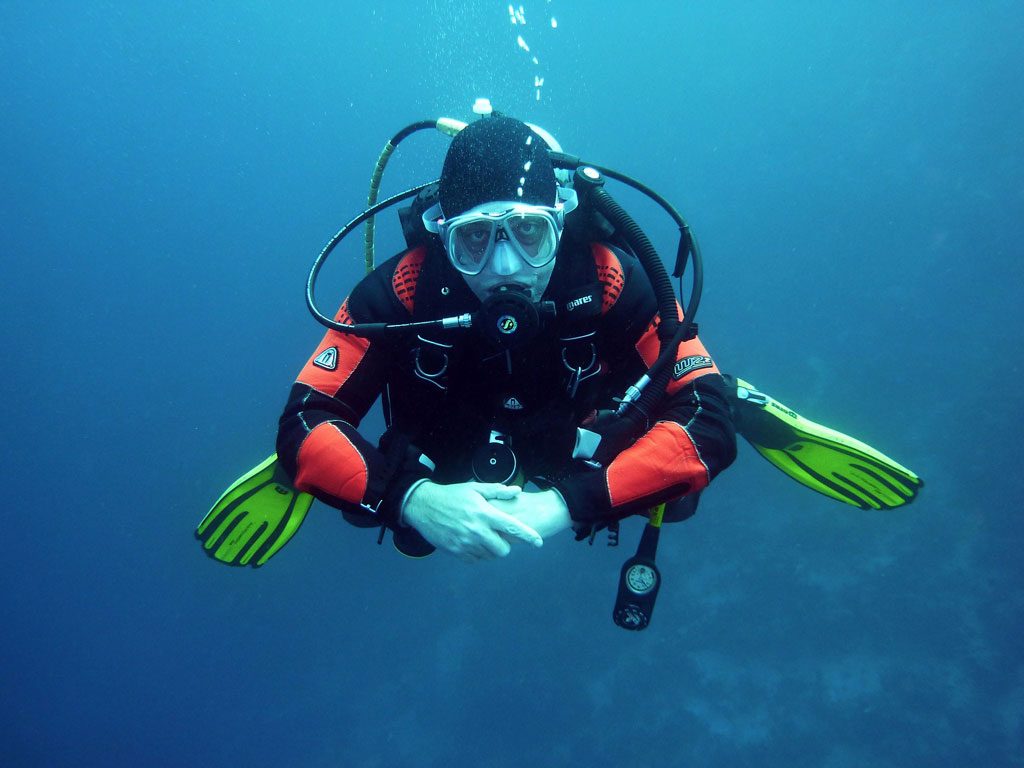
Before we talk about how to fix the problem, it helps to understand why it happens in the first place. The most common cause of mask flooding is a poor seal between the silicone skirt of the mask and your face. This can happen because the mask strap is too loose, because hair or a beard is caught under the skirt, because you were smiling too wide and broke the seal, or simply because you were not wearing the mask correctly.
Masks can also get bumped by marine life, your buddy, or equipment. Sometimes the seal just gives way slightly due to facial movements. Whatever the cause, a bit of water in your mask is a normal part of diving and nothing to panic about.
The Basic Scuba Mask Clearing Technique
The technique for clearing a flooded mask is the same whether your mask is completely full of water or just has a small amount of water pooling at the bottom. The key is to stay calm, keep your regulator in your mouth, and follow the steps smoothly.
Step 1: Stay Calm and Breathe Normally
The most important first step is to not panic. A flooded mask does not affect your air supply at all — your regulator is still providing you with perfectly good air to breathe. Take a breath through your regulator, relax your body, and prepare to perform the clear.
Step 2: Tilt Your Head Back Slightly
Tilt your head back so that you are looking up toward the surface. This positions the mask so that the bottom of the mask is lower than the top, creating an air pocket at the top that will push the water out through the bottom seal.
Step 3: Press the Top of the Mask Against Your Forehead
With one or both hands, press firmly on the top hard frame or rim of your mask against your forehead. This creates a tight seal at the top and the sides of the mask, ensuring that when you exhale through your nose, the air only has one way to go — out through the bottom of the mask, pushing the water with it.
Step 4: Exhale Slowly Through Your Nose
With the top of the mask sealed against your head, exhale gently but steadily through your nose. You will see the water level drop inside the mask as the air from your nose pushes it out through the bottom seal. Continue exhaling until the mask is clear of water.
For a completely flooded mask, you may need to exhale more air than usual. It is perfectly fine to take an additional breath from your regulator mid-way through the process if needed.
Step 5: Check the Result
Once you have exhaled enough to clear the water, open your eyes and check whether the mask is fully cleared. If there is still a little water at the bottom, you can repeat the process or simply tilt your head slightly to drain the last bit out.
How to Clear a Mask Without Touching the Frame
Some divers prefer a slightly different method where they do not press the frame of the mask at all. In this technique, you simply tilt your head back and exhale through your nose with the mask seal relaxed slightly at the bottom. The air from your nose naturally flows to the top of the mask and pushes water out from the bottom.
This method works well for masks with a good, flexible skirt and works especially well once you are comfortable with the basic technique. However, for beginners, pressing the top frame is the more reliable method because it gives you better control over where the air goes.
Practising Mask Clearing in a Swimming Pool
Your open water certification course will include practising mask clearing in a pool before you ever do it in the ocean. This is one of the most valuable parts of the course. Being able to do it in a calm, controlled environment where you can stand up if things go wrong builds the muscle memory you need to do it confidently in open water.
Most instructors will have you start by just flooding the mask slightly, then progress to fully flooding it and clearing it with your eyes open. Some courses also include removing the mask completely underwater and replacing it — which sounds scary but becomes surprisingly manageable with a little practice.
How to Prevent Your Scuba Mask From Flooding
Prevention is always better than the cure, and there are several things you can do to minimise how often you need to clear your mask during a dive.
Always fit your mask on your face properly before entering the water. The strap should be snug but not painfully tight. Too tight actually makes flooding more likely because it distorts the shape of the skirt. Position the mask so that the skirt creates an even seal all the way around your face.
If you have a beard, you should know that facial hair is one of the most common causes of mask leaks. The hair creates tiny channels through the silicone seal that water will find. Some divers use a thin layer of silicone grease or petroleum jelly on their beard before diving to help seal these gaps. Alternatively, a mask specifically designed for facial hair may offer a better fit.
Make sure no hair is caught under the skirt when you put the mask on. Check the seal by pressing the mask to your face and inhaling gently through your nose with the strap loose — if the mask stays on without the strap, the seal is good.
Getting comfortable with your equipment is one of the biggest parts of becoming a confident diver. If you are still building your kit, check out our scuba tank weight chart to understand how to balance your gear for the most comfortable and streamlined dive possible.
Clearing a Mask With Glasses or a Prescription Mask
If you use a prescription dive mask, the clearing technique is exactly the same. Prescription masks have a slightly thicker lens but work identically to standard masks in terms of fit and seal. The technique described in this guide applies fully to prescription masks.
If you use contact lenses under a standard mask, be aware that completely flooding the mask may cause you to lose a lens if your eyes are open when the water fills. If this is a concern, practise mask clearing with your eyes closed first and only open them once the mask is cleared.
What to Do if You Cannot Clear Your Mask
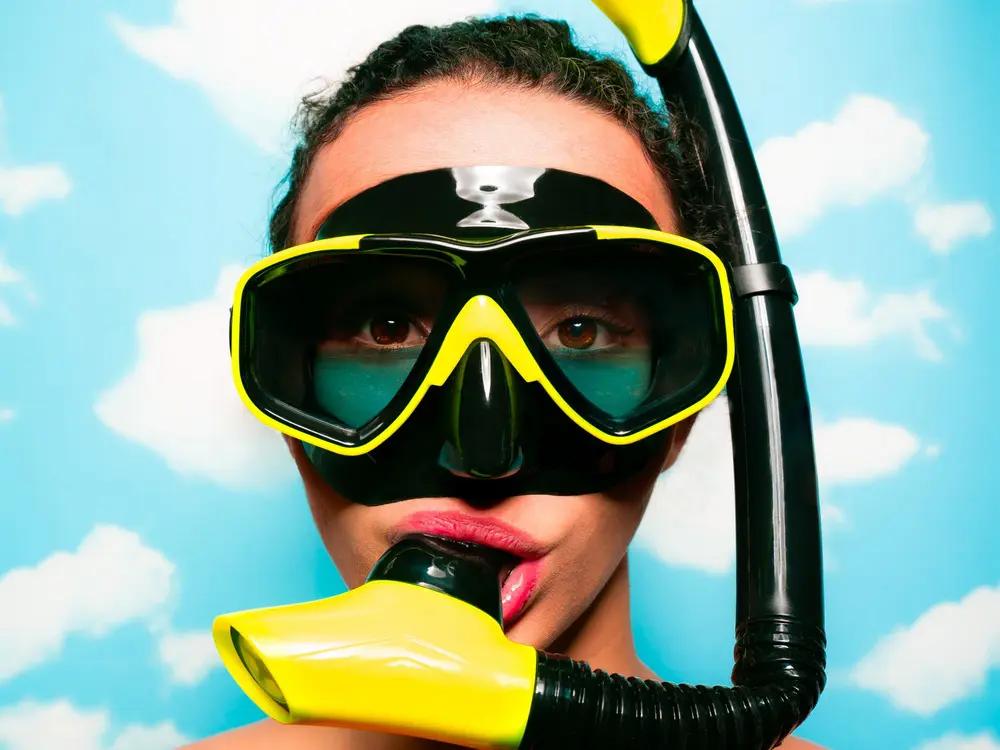
Occasionally, you may find that no matter how many times you exhale through your nose, a small amount of water persists. This usually means the bottom seal of the mask is not maintaining contact with your face properly. Check that your strap is correctly tensioned and that the skirt is seated evenly.
If the mask continues to flood badly throughout a dive, it is completely acceptable to end the dive, surface safely, and address the fit issue on the boat or shore. A mask that keeps flooding is distracting and can affect your safety and enjoyment. Never continue a dive with equipment that is not working correctly.
Frequently Asked Questions
Is it normal to get water in your scuba mask?
Yes, completely normal. Every diver gets water in their mask occasionally. It is one of the first skills taught in any open water course precisely because it happens so frequently. Knowing how to deal with it quickly and calmly is an essential part of being a safe and relaxed diver.
Can I clear my scuba mask at any depth?
Yes, you can perform a mask clear at any depth within recreational limits. The technique works the same way at 10 feet as it does at 60 feet. The water pressure does not affect the mask clearing process in any significant way for recreational dives.
What happens if I inhale water through my nose while clearing my mask?
Inhaling a small amount of water through your nose is unpleasant but not dangerous. Your natural reflex is to close the back of your throat when water enters your nose, which prevents it from reaching your lungs. Stay calm, breathe through your regulator, and the discomfort will pass quickly. This is another reason why practising in a pool first is so valuable.
Do I need to hold my breath to clear my scuba mask?
No, you never hold your breath while scuba diving. Holding your breath underwater with a scuba tank is dangerous and is the most fundamental rule in diving. During mask clearing, you breathe normally through your regulator and only exhale through your nose when you are ready to push the water out of the mask.
How long does it take to learn mask clearing properly?
Most people feel comfortable with basic mask clearing after two or three practice attempts in a pool. Full confidence usually comes after a few open water dives where you have done it in real conditions. Like most dive skills, it feels awkward at first and then becomes automatic very quickly.
Master This Skill and Dive With Total Confidence
Mask clearing is one of those skills that separates nervous new divers from confident, relaxed ones. Once you have got it down, water in your mask becomes a minor inconvenience rather than a frightening experience. Practise it, trust the technique, and you will handle it like a pro. For more beginner diving guides and gear advice, visit us at Scoobadive Guide — where every guide is written to help you dive safer and smarter.