Imagine descending into crystal-clear tropical waters to explore a massive underwater museum frozen in time—a ghost fleet of over 60 sunken warships, aircraft, and submarines from World War II, teeming with vibrant marine life. Welcome to Chuuk Lagoon, the world’s premier wreck diving destination that offers an experience unlike any other on the planet.
- Quick Answer: What Makes Chuuk Lagoon Diving Special?
- Table of Contents
- What is Chuuk Lagoon? A Brief History
- Why Chuuk Lagoon is the World’s Best Wreck Diving Destination
- Top 10 Must-Dive Wrecks in Chuuk Lagoon
- 1. Fujikawa Maru (Depth: 10-34m / 33-112ft)
- 2. Shinkoku Maru (Depth: 12-40m / 40-130ft)
- 3. San Francisco Maru (Depth: 40-65m / 130-213ft)
- 4. Nippo Maru (Depth: 15-46m / 50-150ft)
- 5. Aikoku Maru (Depth: 55-70m / 180-230ft)
- 6. Heian Maru (Depth: 10-35m / 33-115ft)
- 7. Kensho Maru (Depth: 40m / 130ft)
- 8. Yamagiri Maru (Depth: 10-33m / 33-108ft)
- 9. Hoki Maru (Depth: 15-48m / 50-157ft)
- 10. Betty Bomber (Depth: 15m / 50ft)
- Diving Conditions and What to Expect
- Certification Requirements and Skill Levels
- Best Time to Visit Chuuk Lagoon
- How to Plan Your Chuuk Lagoon Diving Trip
- Step 1: Choose Your Diving Style (6-12 months before)
- Step 2: Book Flights (4-6 months before)
- Step 3: Select Accommodation/Operator (4-6 months before)
- Step 4: Arrange Certification and Training (3-6 months before)
- Step 5: Prepare Gear and Equipment (2-3 months before)
- Step 6: Research and Education (1-2 months before)
- Step 7: Travel Logistics (1 month before)
- Step 8: Pack Smart (1 week before)
- Essential Gear and Equipment for Chuuk Lagoon Diving
- Safety Considerations for Wreck Diving in Chuuk Lagoon
- Where to Stay and Dive Operators in Chuuk Lagoon
- Costs and Budget Planning for Chuuk Lagoon Diving
- FAQ: Your Chuuk Lagoon Diving Questions Answered
- Q: Is Chuuk Lagoon suitable for beginner divers?
- Q: What is the best wreck for first-time Chuuk divers?
- Q: Do I need technical diving certification to enjoy Chuuk Lagoon?
- Q: Is it safe to dive inside the wrecks?
- Q: Are there sharks in Chuuk Lagoon?
- Q: Can I take artifacts from the wrecks?
- Q: What happens if I get decompression sickness in Chuuk?
- Q: How many dives should I plan for a week-long trip?
- Q: Do I need Nitrox certification for Chuuk Lagoon?
- Q: What’s the difference between Truk and Chuuk?
- Q: Can non-divers enjoy Chuuk?
- Q: Is Chuuk Lagoon affected by climate change?
- Q: What’s the visibility like compared to other dive destinations?
- Q: Are there any age restrictions for diving Chuuk Lagoon?
- Q: Can I dive Chuuk Lagoon if I haven’t dived in several years?
- Q: What makes Chuuk Lagoon better than other wreck diving destinations?
- Conclusion: Your Chuuk Lagoon Diving Adventure Awaits
Whether you’re a beginner curious about wreck diving, an intermediate diver seeking your next adventure, or an advanced technical diver planning deep penetration dives, Chuuk Lagoon delivers an unforgettable experience. This comprehensive guide will walk you through everything you need to know about diving Chuuk Lagoon—from the haunting history beneath the waves to practical tips for planning your expedition to this remote Pacific paradise.
By the end of this article, you’ll understand why Chuuk Lagoon diving is considered the ultimate bucket-list experience for divers worldwide and how to plan your own journey to explore this underwater time capsule.
Quick Answer: What Makes Chuuk Lagoon Diving Special?
Chuuk Lagoon (formerly Truk Lagoon) is the world’s largest ship graveyard and premier wreck diving destination, featuring:
- 60+ sunken Japanese warships from Operation Hailstone (February 1944)
- Depths ranging from 15 to 60+ meters (suitable for all certification levels)
- Exceptional visibility (typically 20-40 meters/65-130 feet)
- Year-round diving with water temperatures of 27-29°C (81-84°F)
- Rich marine biodiversity thriving on artificial reef structures
- Historical artifacts including tanks, trucks, Zero fighters, and personal effects
- Remote location in Micronesia requiring dedicated travel planning
Best for: Wreck diving enthusiasts, history buffs, underwater photographers, and adventure seekers seeking a world-class diving experience.
Table of Contents
- What is Chuuk Lagoon? A Brief History
- Why Chuuk Lagoon is the World’s Best Wreck Diving Destination
- Top 10 Must-Dive Wrecks in Chuuk Lagoon
- Diving Conditions and What to Expect
- Certification Requirements and Skill Levels
- Best Time to Visit Chuuk Lagoon
- How to Plan Your Chuuk Lagoon Diving Trip
- Essential Gear and Equipment
- Safety Considerations for Wreck Diving
- Where to Stay and Dive Operators
- Costs and Budget Planning
- FAQ: Chuuk Lagoon Diving Questions Answered
What is Chuuk Lagoon? A Brief History
Chuuk Lagoon (formerly known as Truk Lagoon) is a sheltered body of water in the central Pacific Ocean, part of the Federated States of Micronesia. This massive lagoon spans approximately 2,130 square kilometers (822 square miles) and is protected by a barrier reef studded with 11 major islands and numerous smaller islets.
But it’s what lies beneath the surface that makes Chuuk Lagoon legendary among divers worldwide.
Operation Hailstone: The Birth of a Diving Mecca
On February 17-18, 1944, the United States Navy launched Operation Hailstone, a devastating surprise attack on the Japanese Imperial Fleet anchored in Truk Lagoon. Over two days, American carrier-based aircraft sank more than 60 ships and destroyed 275 aircraft, effectively ending Truk’s role as Japan’s forward naval base in the Pacific.
According to maritime historians at the Naval History and Heritage Command, this single operation resulted in the loss of over 250,000 tons of shipping and created what would become the world’s most concentrated collection of diveable WWII wrecks.
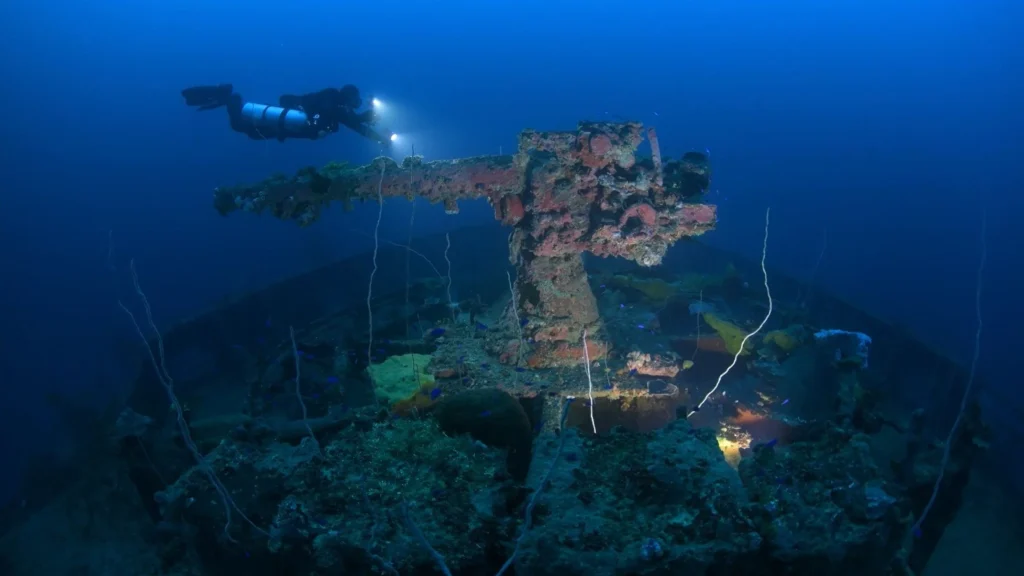
The ships and aircraft remained largely untouched for decades, slowly transforming into artificial reefs that now support an extraordinary marine ecosystem. In 1969, legendary ocean explorer Jacques Cousteau visited Chuuk Lagoon and documented these wrecks in his film “The Lagoon of Lost Ships,” bringing international attention to what he called “the world’s greatest wreck diving destination.”
Today, Chuuk Lagoon diving offers a unique combination of historical exploration and world-class diving, attracting thousands of divers annually to this remote Pacific location.
Why Chuuk Lagoon is the World’s Best Wreck Diving Destination
As someone who has dived wreck sites across the globe—from the wrecks of the Red Sea to the Atlantic’s graveyard off North Carolina—I can confidently say that Chuuk Lagoon diving stands in a category of its own. Here’s why this destination consistently ranks #1 on every serious diver’s bucket list.
1. Unparalleled Concentration of Wrecks
Unlike other wreck diving destinations where you might dive one or two notable wrecks, Chuuk Lagoon offers over 60 diveable wrecks within a relatively compact area. You can dive multiple world-class wrecks in a single day, each offering completely different experiences and discoveries.
2. Exceptional Preservation
The tropical waters, depth, and lack of salvage operations mean these wrecks remain remarkably intact. You’ll find complete ships with cargo holds still full of beer bottles, sake cups, shoes, gas masks, and personal effects—artifacts that provide haunting glimpses into the lives of those who served aboard these vessels over 80 years ago.
3. Incredible Marine Life Integration
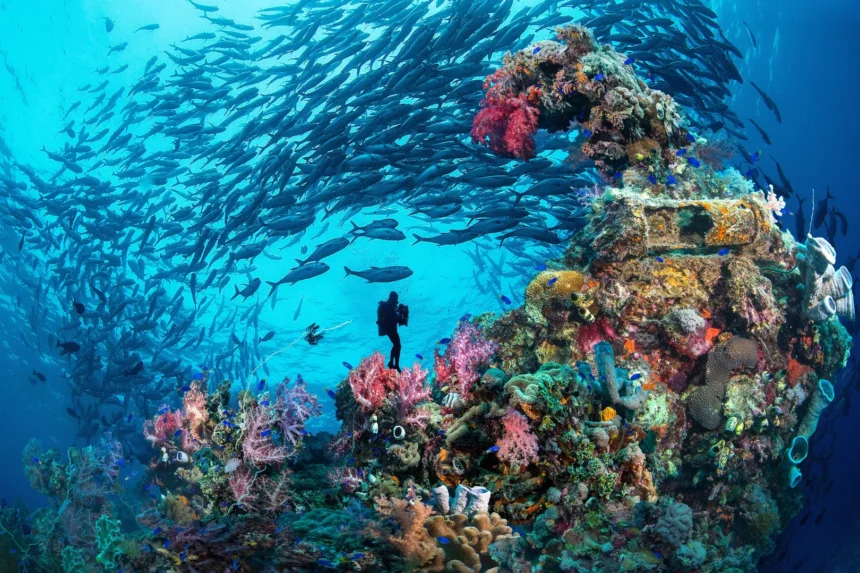
Time has transformed these steel warships into thriving artificial reefs. Hard and soft corals completely encrust the wrecks, while schools of barracuda, jacks, and trevally patrol the decks. You’ll encounter sea turtles, whitetip reef sharks, and even the occasional manta ray, creating a stunning contrast between history and nature.
4. Diving for All Skill Levels
From shallow wrecks at 15 meters (50 feet) perfect for Open Water divers to deep technical dives exceeding 60 meters (200 feet), Chuuk Lagoon diving accommodates every certification level. Beginners can explore intact vessels safely, while technical divers can push their limits with challenging penetration dives.
5. Year-Round Diving Conditions
Chuuk Lagoon benefits from consistently excellent diving conditions throughout the year. Water temperatures hover between 27-29°C (81-84°F), visibility typically ranges from 20-40 meters (65-130 feet), and the protected lagoon offers calm conditions even when ocean swells are present outside the reef.
6. Historical Significance
Beyond the diving experience, Chuuk Lagoon serves as an underwater war memorial. The Federated States of Micronesia has designated the wrecks as protected monuments, ensuring these vessels remain undisturbed as tribute to those who lost their lives during Operation Hailstone.
According to a 2025 survey by Sport Diver magazine, 94% of divers who visited Chuuk Lagoon rated it as their #1 wreck diving experience, with many describing it as a “life-changing” dive destination.
Top 10 Must-Dive Wrecks in Chuuk Lagoon
With over 60 wrecks to explore, choosing where to dive can be overwhelming. Here are the absolute must-dive wrecks that should be on every Chuuk Lagoon diving itinerary, ranked by accessibility and significance.
1. Fujikawa Maru (Depth: 10-34m / 33-112ft)
Skill Level: Open Water and above
The Fujikawa Maru is arguably the most famous wreck in Chuuk Lagoon and for good reason. This 132-meter (433-foot) aircraft ferry sits perfectly upright and is completely encrusted with colorful corals and sponges. The highlight? The cargo holds contain intact Zero fighter aircraft still recognizable after eight decades underwater.
The ship’s superstructure is accessible in the 10-18 meter range, making it perfect for newer divers, while more experienced divers can explore the engine room and deeper holds. I’ve dived this wreck three times, and each visit reveals something new—from the engine telegraph still pointing to “Full Ahead” to the ceramic sake bottles scattered throughout the galley.
Don’t Miss: The Zero fighters in Hold #2 and the ship’s spectacular coral-covered mast.
2. Shinkoku Maru (Depth: 12-40m / 40-130ft)
Skill Level: Advanced Open Water recommended
This 152-meter (500-foot) fleet tanker is often called the most beautiful wreck in Chuuk Lagoon. The Shinkoku Maru’s superstructure, sitting at 12 meters, is a photographer’s paradise with soft corals in every color imaginable creating a stunning backdrop.
The engine room is considered one of the best wreck penetrations in the world, with intact machinery, catwalks, and equipment easily visible. The galley still contains dishes, sake bottles, and cooking utensils, while personal quarters reveal bunk beds, clothing, and personal effects.
Don’t Miss: The engine room penetration and the ship’s doctor’s office with medicine bottles still on shelves.
3. San Francisco Maru (Depth: 40-65m / 130-213ft)
Skill Level: Deep Diver specialty or Technical
Known as the “Million Dollar Wreck,” the San Francisco Maru sits deeper than recreational limits but is absolutely worth the advanced training required to dive it. This cargo ship contains one of the most incredible collections of military artifacts anywhere underwater.
The holds contain three intact tanks (including a Type 95 Ha-Go light tank visible on the deck), trucks, mines, bombs, torpedoes, and artillery shells. The ship rests on her port side, creating dramatic angles and photo opportunities for those with the skills and certification to explore her safely.
Don’t Miss: The tanks on the foredeck—an absolutely surreal sight at depth.
4. Nippo Maru (Depth: 15-46m / 50-150ft)
Skill Level: Advanced Open Water
This 106-meter (350-foot) cargo vessel offers excellent wreck diving for intermediate divers. The Nippo Maru’s holds contain trucks, maritime equipment, mines, artillery shells, and ceramic dishes—all easily accessible without technical penetration.
The ship’s intact bridge and wheelhouse sit at around 30 meters, offering a perfect photo opportunity with the ship’s telegraph, helm, and navigational equipment still in place. The superstructure is heavily colonized by hard corals and surrounded by large schools of fish.
Don’t Miss: The trucks in the forward hold and the wheelhouse with intact steering equipment.
5. Aikoku Maru (Depth: 55-70m / 180-230ft)
Skill Level: Technical (Trimix recommended)
For technical divers, the Aikoku Maru represents the ultimate Chuuk Lagoon diving challenge. This armed passenger-cargo ship lies deep and dark but rewards qualified divers with an extraordinary experience.
The massive ship contains artillery pieces, trucks, railroad cars, and munitions. The engine room is vast and impressive, though proper training and gas planning are essential at these depths. Many technical divers consider this their favorite wreck in Chuuk Lagoon despite—or perhaps because of—its challenging depth.
Warning: This dive requires technical certification, appropriate gas mixes, and experience with deep wreck penetration. Narcosis is a significant concern at these depths.
6. Heian Maru (Depth: 10-35m / 33-115ft)
Skill Level: Open Water and above
The Heian Maru is another excellent multi-level dive suitable for all certification levels. This submarine tender/aircraft ferry sits upright with her superstructure at 10 meters and the main deck at 35 meters.
The ship’s periscope room still contains periscopes, though they’re now encrusted with coral. The holds contain workshop equipment, spare submarine parts, and tools. The ship is also home to large groupers, lionfish, and occasionally whitetip reef sharks.
Don’t Miss: The periscope room and the bridge area with communication equipment.
7. Kensho Maru (Depth: 40m / 130ft)
Skill Level: Deep Diver specialty
This relatively small 85-meter (280-foot) cargo ship punches above her weight in terms of interest. The Kensho Maru sits upright and largely intact, with excellent penetration opportunities for qualified divers.
The cargo holds reveal construction equipment, drums, and supplies, while the crew quarters contain personal effects that provide poignant reminders of the human cost of war. The wreck is often quieter than some of the more famous sites, offering a more contemplative diving experience.
Don’t Miss: The intact crew quarters and galley areas.
8. Yamagiri Maru (Depth: 10-33m / 33-108ft)
Skill Level: Advanced Open Water
This beautiful 130-meter (427-foot) freighter sits upright and offers superb diving across multiple levels. The ship’s masts reach to within 10 meters of the surface, covered in stunning soft corals and surrounded by schooling fish.
The holds contain mining and construction equipment, including rail cars, shovels, and tools. The engine room is accessible but requires proper training and technique. The Yamagiri Maru also features excellent night diving with bioluminescent plankton and hunting lionfish.
Don’t Miss: The spectacular coral-covered masts and the engine room.
9. Hoki Maru (Depth: 15-48m / 50-157ft)
Skill Level: Advanced Open Water
This large freighter is another excellent wreck offering something for every skill level. The superstructure sits shallow at 15 meters, while the sand bottom reaches 48 meters, allowing for perfect multi-level dive planning.
The Hoki Maru’s cargo includes trucks, cement bags (now rock-hard), and mining equipment. The ship’s galley area contains ceramic bowls and dishes, while the bridge offers intact telegraphs and navigation equipment.
Don’t Miss: The trucks in the forward holds and the bridge telegraph.
10. Betty Bomber (Depth: 15m / 50ft)
Skill Level: Open Water
Not all the best Chuuk Lagoon diving involves ships. This Mitsubishi G4M “Betty” bomber sits on the lagoon floor in shallow water, making it accessible to all divers and perfect for extended bottom times.
The aircraft remains remarkably intact considering eight decades underwater. You can see the cockpit instruments, gun turrets, and even the pilot’s seat. The Betty is usually surrounded by fish and offers an interesting change of pace from ship wrecks.
Don’t Miss: The intact cockpit area with visible instruments and controls.
Diving Conditions and What to Expect
Understanding the diving conditions in Chuuk Lagoon is essential for planning your trip and ensuring you have the appropriate skills and equipment for this unique environment.
Water Temperature
Chuuk Lagoon enjoys consistent tropical water temperatures year-round, ranging from 27-29°C (81-84°F) at the surface and maintaining similar temperatures even at depth. Most divers find a 3mm wetsuit perfectly adequate, though some prefer 5mm suits for multiple daily dives or extended bottom times on deeper wrecks.
Visibility
Visibility in Chuuk Lagoon typically ranges from 20-40 meters (65-130 feet), though it can occasionally exceed 50 meters (165 feet) during optimal conditions. The protected lagoon environment means visibility remains consistently good throughout the year, though it may decrease slightly during periods of heavy rainfall or strong winds.
As of 2026, climate research indicates that Chuuk Lagoon’s visibility has remained stable despite global ocean changes affecting other dive destinations, making it an increasingly valuable diving resource.
Currents
The protected nature of Chuuk Lagoon means currents are generally minimal to moderate. Most wrecks experience little to no current, allowing for relaxed exploration and plenty of bottom time. However, sites near the lagoon passes may encounter stronger currents during tidal exchanges, requiring dive operators to time dives accordingly.
Depth Range
Chuuk Lagoon diving accommodates every certification level:
- Shallow wrecks (10-18m): Perfect for Open Water divers and beginners
- Medium depth (18-30m): Ideal for Advanced Open Water divers
- Deep recreational (30-40m): Requires Deep Diver specialty
- Technical depths (40m+): Demands technical certifications and appropriate gas planning
Sea Conditions
The lagoon’s barrier reef provides excellent protection from ocean swells, creating calm surface conditions even when the open ocean experiences rough weather. Boat rides to dive sites are typically comfortable and short, rarely exceeding 20-30 minutes.
Marine Life
Beyond the historical artifacts, Chuuk Lagoon supports exceptional biodiversity. Expect encounters with:
- Large fish schools: Barracuda, jacks, trevally, snappers
- Reef sharks: Whitetip and blacktip reef sharks (harmless to divers)
- Sea turtles: Green and hawksbill turtles are common
- Macro life: Nudibranchs, shrimp, crabs, and octopuses
- Coral coverage: Extensive hard and soft coral growth on wreck structures
- Occasional pelagics: Manta rays, eagle rays, and dolphins in deeper waters
According to a 2025 biodiversity assessment by the Coral Triangle Initiative, Chuuk Lagoon’s wrecks support over 300 species of fish and 200 species of coral, demonstrating how these artificial reefs have become genuine marine ecosystems.
Certification Requirements and Skill Levels
One of the most common questions I receive about Chuuk Lagoon diving is: “What certification do I need?” The answer depends on which wrecks you want to dive and how deep you’re willing to go.
Open Water Certification (18m/60ft limit)
What You Can Dive:
- Fujikawa Maru’s superstructure (to 18m)
- Heian Maru’s upper decks
- Various shallow aircraft wrecks
- Shinkoku Maru’s superstructure (with guide)
Experience Recommendation: While technically possible, I recommend Open Water divers have at least 20 logged dives before attempting Chuuk Lagoon. Wreck diving presents unique challenges including swim-throughs, confined spaces, and silt suspension that basic certification doesn’t fully prepare you for.
Advanced Open Water (30m/100ft limit)
What You Can Dive:
- Fujikawa Maru (complete wreck)
- Shinkoku Maru (excluding engine room)
- Nippo Maru
- Yamagiri Maru
- Hoki Maru
- Most of the “standard” wreck diving itinerary
Recommendation: This is the minimum certification I recommend for getting the full Chuuk Lagoon experience. The Advanced certification and Deep Diver specialty open up approximately 70% of the accessible wrecks.
Technical Certifications (40m+/130ft+)
What You Can Dive:
- San Francisco Maru (requires Advanced Nitrox, Decompression Procedures)
- Aikoku Maru (requires Trimix certification)
- Deep penetrations on shallower wrecks
- Extended bottom times on all wrecks
Recommendation: Technical training transforms the Chuuk Lagoon diving experience, allowing access to the most pristine and artifact-rich wrecks. However, these certifications require significant investment in training, equipment, and experience.
Specialty Certifications Worth Having
Wreck Diver Specialty: While not required, this specialty teaches proper wreck penetration techniques, navigation, and safety procedures that significantly enhance your Chuuk Lagoon experience.
Nitrox Certification: Essential for maximizing bottom time on multiple daily dives. Enriched air allows longer explorations while reducing nitrogen loading across multiple days of diving.
Navigation: The large size of these wrecks means good navigation skills help you locate specific features and find your way back to the mooring line.
Peak Performance Buoyancy: Superior buoyancy control is critical for wreck diving to avoid stirring up silt, damaging coral growth, or striking wreck structures.
Guided vs. Solo Wreck Diving
All Chuuk Lagoon diving is done with professional guides who know these wrecks intimately. Even highly experienced divers benefit from local knowledge about entry/exit points, artifact locations, and safe penetration routes. The guides also ensure divers respect these war graves and follow proper wreck diving etiquette.
Best Time to Visit Chuuk Lagoon
One of Chuuk Lagoon’s greatest advantages is that it offers excellent diving year-round, but certain months provide optimal conditions for specific interests.
Year-Round Diving (January-December)
Unlike many dive destinations with distinct seasons, Chuuk Lagoon maintains consistently good conditions throughout the year. Water temperature varies by only 1-2°C annually, and visibility remains strong across all months.
Peak Season (December-April)
Pros:
- Slightly calmer winds and seas
- Optimal visibility (often 30-40m)
- Driest months with less rainfall
- Cooler air temperatures (25-28°C)
Cons:
- Higher prices for flights and accommodation
- More divers at popular sites
- Need to book 4-6 months in advance
This period coincides with Northern Hemisphere winter, making it perfect for divers escaping cold weather at home.
Shoulder Season (May-June, October-November)
Pros:
- Excellent conditions with fewer crowds
- Better pricing on packages and flights
- More availability at top dive operators
- Still great visibility and calm seas
Cons:
- Slightly increased rainfall (brief afternoon showers)
- Occasional windier days
In my experience, shoulder season offers the best value for Chuuk Lagoon diving without sacrificing conditions.
Wet Season (July-September)
Pros:
- Lowest prices of the year
- Virtually empty dive sites
- Warmer water temperatures
- Good visibility despite rain
Cons:
- Frequent afternoon rain showers
- Higher humidity
- Potential for tropical storms (though rare)
- Some liveaboards may not operate
The wet season brings more rainfall, but this rarely affects diving since you’re already underwater! Brief tropical downpours typically occur in late afternoon, after diving is complete.
Special Events and Considerations
Operation Hailstone Anniversary (February 17-18): Some divers make pilgrimages during these dates to honor those lost during the battle. Expect higher visitor numbers and occasional memorial ceremonies.
Micronesian Independence Day (November 3): Celebrations throughout Chuuk with cultural events, though this doesn’t significantly impact diving.
2026 Weather Outlook
According to Pacific climate forecasts for 2026, Chuuk is expected to experience neutral ENSO (El Niño-Southern Oscillation) conditions, translating to typical weather patterns without extreme variations. This bodes well for consistent diving conditions throughout the year.
My Recommendation: If you have flexibility, visit during shoulder season (May-June or October-November) for the best combination of conditions, value, and availability. However, any month works well for Chuuk Lagoon diving.
How to Plan Your Chuuk Lagoon Diving Trip
Planning a trip to Chuuk Lagoon requires more preparation than typical dive destinations due to its remote location. Here’s your step-by-step guide to creating an unforgettable diving expedition.
Step 1: Choose Your Diving Style (6-12 months before)
Liveaboard Option:
- 7-14 day cruises dedicated to diving
- 3-5 dives daily with night dives available
- Maximum wreck access including remote sites
- All-inclusive packages
- Best for serious divers wanting maximum dive time
Land-Based Option:
- More flexibility in daily schedule
- Cultural experiences on Weno Island
- 2-3 dives daily from day boats
- Better for families or mixed groups
- More dining and entertainment variety
My Recommendation: Liveaboards offer the quintessential Chuuk Lagoon diving experience, allowing you to visit more wrecks and maximize your time underwater. However, land-based operations work well for shorter trips or those wanting to experience local culture.
Step 2: Book Flights (4-6 months before)
Getting to Chuuk requires planning due to limited flight options:
Primary Route: United Airlines operates the “Island Hopper” from Honolulu (HNL) or Guam (GUM) to Chuuk International Airport (TKK).
Typical Routing:
- US travelers: Mainland USA → Honolulu → Guam → Chuuk
- International travelers: Hub city → Guam → Chuuk
- Flight time: 7-10 hours from Honolulu (with stops)
Important Notes:
- Flights operate 3-4 times weekly (not daily)
- Book early as seats fill quickly during peak season
- Build in buffer days for potential flight delays
- Consider breaking journey in Guam for easier travel
Step 3: Select Accommodation/Operator (4-6 months before)
Top Liveaboard Options:
- Odyssey: Premier liveaboard with spacious cabins, nitrox, technical diving support
- Thorfinn: Longest-operating liveaboard, character-filled vessel, excellent crew
- Truk Master: Modern vessel with photography facilities and technical diving
Top Land-Based Operators:
- Blue Lagoon Resort: Best resort with dive operation, pool, restaurant
- Truk Blue Lagoon Resort: Mid-range option with good facilities
- Blue Lagoon Dive Shop: Professional operation for day diving
Research operators carefully, reading recent reviews on ScubaBoard and dive forums. Ensure they maintain proper safety equipment, experienced dive guides, and well-maintained boats.
Step 4: Arrange Certification and Training (3-6 months before)
Assess your current certification against your diving goals:
- Need Advanced? Complete at home before traveling
- Want technical diving? Complete Advanced Nitrox/Decompression Procedures first
- Lacking Nitrox? Get certified before departure
- Limited wreck experience? Consider Wreck Specialty course
Some operators offer training in Chuuk, but dedicating vacation days to classroom work isn’t ideal when you could be diving world-class wrecks.
Step 5: Prepare Gear and Equipment (2-3 months before)
Essential Equipment:
- Wetsuit: 3mm or 5mm depending on personal preference
- Dive computer with Nitrox capability (conservative algorithm recommended)
- Underwater light: Minimum 1000 lumens for wreck penetration
- Backup light: Essential for wreck diving safety
- Reef-safe sunscreen: Required for environmental protection
- DSMB and reel: Required for safety stops
- Slate and wetnotes: Useful for logging artifacts and locations
Highly Recommended:
- Camera with good low-light capability (wrecks are dark)
- Wide-angle lens for ship exteriors
- Macro lens for artifacts and marine life
- Multiple batteries and storage cards
- Spare mask and fin straps
Available for Rental: Most operators provide rental equipment, though I recommend bringing your own computer, mask, and wetsuit for comfort and familiarity.
Step 6: Research and Education (1-2 months before)
Enhance your experience by learning the history:
- Read “Descent into Darkness” by Cmdr. Edward C. Raymer
- Watch Jacques Cousteau’s “The Lagoon of Lost Ships”
- Study ship diagrams and layouts
- Review WWII Pacific Theater history
- Join online forums for trip reports and advice
Understanding the historical context transforms wreck diving from recreational activity to meaningful exploration.
Step 7: Travel Logistics (1 month before)
Passport and Visas:
- Valid passport required (6 months validity recommended)
- US citizens: No visa required for stays under 30 days
- Other nationalities: Check FSM visa requirements
Health Preparations:
- Consult dive physician if any medical conditions
- Update tetanus vaccination
- Bring prescription medications in original containers
- Consider malaria prophylaxis (very low risk but present)
- Purchase dive insurance with evacuation coverage
Money and Banking:
- US dollars are official currency
- Limited ATM availability (bring sufficient cash)
- Credit cards accepted at major hotels but not everywhere
- Budget $20-30 daily for tips and incidentals
Step 8: Pack Smart (1 week before)
Don’t Forget:
- Dive certification cards and logbook
- Dive insurance documentation
- Proof of recent medical exam (if required)
- All charging cables for electronics
- Seasickness medication (even lagoon can have movement)
- Reef-safe sunscreen and insect repellent
- Light rain jacket
- Casual clothing for evenings
Weight Limits: Airlines have strict baggage limits; check your specific flight for dive equipment allowances.
Essential Gear and Equipment for Chuuk Lagoon Diving
Having the right equipment can make the difference between a good Chuuk Lagoon diving experience and an extraordinary one. Here’s what you need based on your diving level and goals.
Core Diving Equipment
Exposure Protection: A 3mm wetsuit works for most divers, but consider 5mm if you’re doing 3-4 dives daily over multiple days. The cumulative exposure can leave you chilled despite warm water. Some divers prefer hooded vests for wreck penetrations where thermoclines occasionally exist.
Dive Computer: Choose a computer with conservative algorithms and Nitrox capability. Wreck diving often pushes no-decompression limits, so having a reliable computer with safety margin is essential. I personally use a Shearwater Peregrine dive computer for its clear display, ease of use, and proven reliability in wreck diving environments.
Lighting: This is non-negotiable for Chuuk Lagoon diving. You need:
- Primary light: Minimum 1000 lumens for illuminating wreck interiors
- Backup light: Always carry a second light for redundancy
- Video/photo lights: If filming, consider 2000-3000 lumen lights
Penetrating dark wrecks without adequate lighting is dangerous and means you’ll miss incredible artifacts and details.
Photography Equipment
Chuuk Lagoon is a photographer’s paradise, but the environment demands specific equipment:
Camera Choice:
- Wide-angle setup for ship exteriors and establishing shots
- Macro capability for artifacts and marine life details
- Good low-light performance (high ISO capability)
- Video capability for touring wreck interiors
Recommended Settings:
- Shoot in RAW format for maximum editing flexibility
- Use external strobes/lights for wreck interiors
- Bracket exposures for challenging light conditions
- Bring multiple batteries and storage cards
Safety Equipment
Redundancy is Key:
- Surface marker buoy (DSMB) with minimum 1.5m length
- Reel with minimum 50m of line
- Dive knife or cutting tool
- Whistle attached to BCD
- Backup mask in accessible pocket
- Spare fin strap
For Technical Diving:
- Stage/deco cylinders as required
- Backup regulators and gauges
- Jon lines for ascent line use
- Slate for gas planning notes
Navigation and Planning Tools
Underwater:
- Compass for navigation inside large wrecks
- Depth gauge or bottom timer (backup to computer)
- Slate for logging artifacts and route planning
- Wetnotes for pre-dive briefings
Surface:
- Detailed wreck maps and diagrams
- Dive planning software or tables
- Logbook for detailed notes and sketches
What NOT to Bring
Leave at Home:
- Gloves (prohibited to prevent artifact removal)
- Collection bags or containers
- Tools for artifact recovery
- Spearfishing equipment (prohibited in lagoon)
Chuuk’s wrecks are protected monuments. Any artifact removal is illegal and heavily penalized.
Rental Equipment Availability
Most operators offer rental equipment including:
- BCD and regulators
- Wetsuits (3mm and 5mm)
- Fins and masks
- Basic dive lights
- Underwater cameras (limited)
However, I strongly recommend bringing personal equipment when possible for comfort, familiarity, and reliability.
Safety Considerations for Wreck Diving in Chuuk Lagoon
While Chuuk Lagoon diving is generally safe when conducted properly, wreck diving presents unique hazards that deserve serious attention. Here’s how to stay safe while exploring these underwater time capsules.
Understanding Wreck Diving Hazards
Entanglement Risks: Wrecks contain cables, wires, netting, and deteriorating structures that can snag equipment or divers. Maintain streamlined profiles, secure loose equipment, and move deliberately through wreck structures.
Silt and Visibility Loss: Poor buoyancy control or careless fin kicks can suspend silt, reducing visibility to zero in seconds inside wrecks. Practice proper buoyancy and frog kicks before entering confined spaces.
Disorientation: Large, complex wrecks can be disorienting, especially inside holds or engine rooms. Always maintain a continuous guideline to the exit, dive with experienced guides, and know your route before entering.
Structural Collapse: These wrecks are 80+ years old. Metal fatigues, decks collapse, and structures deteriorate. Avoid touching or grabbing wreck structures, and never swim under unstable sections.
Specific Chuuk Lagoon Considerations
Depth Management: Many wrecks span significant depth ranges. Manage your gas consumption, watch your computer closely, and don’t exceed your certification limits chasing interesting artifacts deeper on the wreck.
Nitrogen Narcosis: Deeper wrecks (30m+) can induce narcosis, impairing judgment and reaction time. Know your personal narcosis threshold and stay within conservative limits, especially in overhead environments.
Penetration Limits: Only penetrate wrecks within your training and experience level. The “light zone” (where you can see natural light) is appropriate for recreational divers. Beyond that requires proper training and equipment.
Marine Life: While generally harmless, Chuuk’s marine life includes lionfish, scorpionfish, and occasionally sea snakes. Watch hand placement and avoid touching anything underwater.
Best Practices for Safe Wreck Diving
- Dive with Professionals: Use experienced local guides who know these wrecks intimately
- Follow the Rule of Thirds: Reserve one-third gas for exploration, one-third for return, one-third for emergencies
- Maintain Visual Contact: Never lose sight of your buddy or guide inside wrecks
- Use Proper Ascent Procedures: Make slow controlled ascents with proper safety stops
- Monitor Your Computer: Check frequently during dives and surface with proper reserve
- Respect Your Limits: Don’t exceed certification depths or attempt dives beyond your skill level
- Check Equipment Thoroughly: Perform complete pre-dive checks on all equipment
- Stay Hydrated: Tropical conditions and multiple daily dives demand extra hydration
Emergency Procedures
Lost Diver Scenario: If separated from your group inside a wreck, remain calm, exit using your guideline or following natural light, and ascend following proper procedures. Do not search inside the wreck.
Out of Air: Share air with your buddy using proper air-sharing techniques. Exit the wreck immediately via the safest route and ascend with safety stops.
Equipment Failure: Signal your buddy or guide immediately. Exit the wreck if inside and abort the dive. Most equipment failures are manageable with proper training and backup equipment.
Medical Emergency: Chuuk has a recompression chamber on Weno Island operated by trained technicians. All reputable dive operators have emergency oxygen, first aid equipment, and evacuation procedures.
Dive Insurance
Critical Recommendation: Purchase dive insurance that includes:
- Recompression chamber coverage
- Medical evacuation from remote locations
- Transportation to adequate medical facilities
- Trip cancellation/interruption coverage
Divers Alert Network (DAN) and similar organizations provide comprehensive dive insurance. Given Chuuk’s remoteness, evacuation insurance is essential—medical evacuation can cost $50,000-$100,000 without coverage.
Pre-Dive Health Considerations
Fitness for Diving: Wreck diving can be physically demanding. Ensure you’re in adequate physical condition for:
- Swimming against possible currents
- Climbing boat ladders in full equipment
- Managing equipment through confined spaces
- Multiple daily dives over consecutive days
Medical Clearance: If you have any medical conditions, obtain written clearance from a dive physician before traveling. Chuuk’s remote location makes managing medical emergencies challenging.
Where to Stay and Dive Operators in Chuuk Lagoon
Choosing the right accommodation and dive operator significantly impacts your Chuuk Lagoon diving experience. Here’s your comprehensive guide to options at every budget level.
Liveaboard Options (Best for Serious Divers)
1. Odyssey Adventures
- Type: Purpose-built liveaboard
- Capacity: 16 guests in 8 cabins
- Highlights: Spacious cabins, excellent dive deck, nitrox, technical diving support
- Typical Package: 7-10 night trips with 3-4 dives daily
- Price Range: $2,800-$4,500 per week
- Best For: Photographers, technical divers, comfort-oriented travelers
2. Thorfinn
- Type: Converted oil rig supply vessel (unique!)
- Capacity: 22 guests
- Highlights: Character-filled vessel, longest operating liveaboard, excellent crew
- Typical Package: 7-10 night trips
- Price Range: $2,200-$3,500 per week
- Best For: Budget-conscious divers, social atmosphere lovers
3. Truk Master
- Type: Modern purpose-built vessel
- Capacity: 16 guests
- Highlights: Photography facilities, comfortable cabins, technical diving
- Typical Package: 7-10 night trips
- Price Range: $2,500-$4,000 per week
- Best For: Photographers, mid-range budget divers
Land-Based Accommodation
Premium Option: Blue Lagoon Resort
- Rating: ★★★★ (Best on island)
- Features: Pool, restaurant, bar, air-conditioned rooms, WiFi
- Dive Operation: Professional on-site dive shop, 2-3 boat dives daily
- Room Rates: $150-$250 per night
- Dive Packages: $400-$600 for 6-10 dives
- Best For: Families, non-diving partners, those wanting island experience
Mid-Range: Truk Blue Lagoon Resort
- Rating: ★★★
- Features: Restaurant, basic amenities, air conditioning
- Dive Operation: Partner with local dive shops
- Room Rates: $80-$150 per night
- Best For: Budget-conscious land-based divers
Budget Options: Several local guesthouses offer basic accommodation for $40-$80 per night. Facilities are simple but adequate. Arrange diving separately with local operators.
Recommended Dive Operators (Land-Based)
Blue Lagoon Dive Center
- Most established and professional operation
- Experienced multilingual dive guides
- Well-maintained equipment and boats
- Nitrox available
- All certification levels accommodated
Sundance Dive Chuuk
- Small, personalized operation
- Focus on underwater photography
- Technical diving support
- Custom itineraries available
Blue Lagoon Dive Shop
- Good for recreational diving
- Competitive pricing
- Friendly local guides
What’s Included vs. Extra Costs
Typically Included:
- Accommodation (liveaboard or resort)
- Boat diving with tanks and weights
- Dive guide services
- Meals (liveaboard) or breakfast (land-based)
Additional Costs:
- Nitrox fills: $8-$15 per fill
- Equipment rental: $30-$60 per day (full set)
- Dive computer rental: $10-$15 per day
- Underwater camera rental: $30-$50 per day
- Alcoholic beverages
- Gratuities for crew/guides (15-20% customary)
- Port fees and marine park fees
Booking Strategy
For Liveaboards:
- Book 6-12 months advance for peak season
- Confirm dive experience requirements
- Verify nitrox and technical diving support if needed
- Check cancellation policies carefully
For Land-Based:
- Book 3-6 months in advance
- Confirm dive packages and pricing
- Verify included meals and amenities
- Check proximity to dive shop
Reviews and Research
Before booking, research recent reviews on:
- ScubaBoard.com (detailed trip reports)
- TripAdvisor (accommodation quality)
- Facebook diving groups (current conditions)
- Operator websites (updated information)
Costs and Budget Planning for Chuuk Lagoon Diving
Chuuk Lagoon isn’t a budget destination, but understanding costs helps you plan appropriately and avoid surprises. Here’s a realistic breakdown for 2026.
Liveaboard Package Costs
7-Night Liveaboard Package:
- Budget Option (Thorfinn): $2,200-$2,800
- Mid-Range (Odyssey/Truk Master): $3,000-$4,000
- Premium (Private cabin, photographer package): $4,500-$6,000
Included: Accommodation, meals, 3-4 dives daily, tanks, weights, dive guides
Not Included: Flights, nitrox, equipment rental, gratuities, alcoholic drinks
Land-Based Package Costs (7 Days/6 Nights)
Budget Package:
- Accommodation: $50-$80 × 6 = $300-$480
- Diving (12 dives): $600-$800
- Meals: $25-$40 × 6 = $150-$240
- Total: $1,050-$1,520
Mid-Range Package:
- Accommodation: $100-$150 × 6 = $600-$900
- Diving (12 dives): $700-$900
- Meals: $40-$60 × 6 = $240-$360
- Total: $1,540-$2,160
Premium Package:
- Accommodation: $180-$250 × 6 = $1,080-$1,500
- Diving (15 dives): $900-$1,200
- Meals: $60-$80 × 6 = $360-$480
- Total: $2,340-$3,180
Flight Costs
From Major US Cities:
- West Coast (LAX, SFO, SEA): $1,200-$2,000 round trip
- Central US (DEN, DFW, ORD): $1,400-$2,200 round trip
- East Coast (JFK, ATL, MIA): $1,600-$2,500 round trip
From International Destinations:
- Australia/New Zealand: $1,000-$1,800 via Guam
- Asia: $800-$1,500 via Manila or Guam
- Europe: $2,000-$3,000 via Asian hubs
Booking Tips:
- Book 4-6 months in advance for best prices
- Consider positioning flight to Honolulu/Guam on points
- Build flexibility for potential delays
- Tuesday/Wednesday departures often cheaper
Additional Costs to Budget
Before Trip:
- Dive insurance: $80-$150 annually
- Vaccinations/medical: $50-$200
- New equipment/gear: $200-$1,000+ (if needed)
- Travel insurance: $100-$200
During Trip:
- Nitrox fills: $10-$15 × 12-20 dives = $120-$300
- Equipment rental: $40-$60 × 7 days = $280-$420 (if needed)
- Tips/gratuities: 15-20% of dive costs = $200-$400
- Souvenirs and extras: $100-$300
- Airport transfers: $20-$40 round trip
Unexpected Costs:
- Flight delays/extra nights: $150-$300 potential
- Lost luggage necessities: $100-$200 potential
- Additional dive days: $150-$200 per day
Total Trip Budget Estimates (7-Day Trip)
Budget Traveler (Land-Based):
- Flights: $1,400
- Accommodation/Diving: $1,200
- Food: $200
- Additional costs: $400
- Total: $3,200-$3,800
Mid-Range Traveler (Land-Based):
- Flights: $1,600
- Accommodation/Diving: $1,800
- Food: $300
- Additional costs: $600
- Total: $4,300-$5,200
Liveaboard Traveler:
- Flights: $1,600
- Liveaboard package: $3,500
- Additional costs: $500
- Total: $5,600-$6,800
Premium Liveaboard Experience:
- Flights: $1,800
- Premium liveaboard: $5,000
- Nitrox, rental, extras: $800
- Total: $7,600-$9,000
Money-Saving Strategies
- Travel During Shoulder Season: Save 20-30% on packages and flights
- Book Dive Packages: Multi-dive packages offer better per-dive pricing
- Bring Your Own Gear: Save $40-$60 daily on rental costs
- Group Discounts: Some operators offer discounts for 4+ divers booking together
- Combine Destinations: If flying through Guam, consider spending a day or two there
- Use Points/Miles: Redeem airline miles for Pacific flights
- Book Early: Liveaboards offer early booking discounts (10-15%)
Is Chuuk Lagoon Diving Worth the Cost?
For most divers who visit Chuuk Lagoon, the answer is an emphatic yes. The concentration of world-class wrecks, excellent conditions, and unique historical significance create an experience that justifies the investment. Many divers consider Chuuk their #1 diving experience despite visiting destinations worldwide.
However, budget realistically and plan thoroughly to avoid financial stress diminishing your enjoyment of this bucket-list destination.
FAQ: Your Chuuk Lagoon Diving Questions Answered
Q: Is Chuuk Lagoon suitable for beginner divers?
A: Yes, with caveats. Chuuk Lagoon offers excellent diving for beginners with several shallow wrecks accessible at 15-20 meters. However, I recommend beginners have their Open Water certification plus 15-20 logged dives before attempting wreck diving in Chuuk. The environment presents unique challenges including potential disorientation, overhead structures, and depth variations that basic Open Water training doesn’t fully prepare you for. Most operators provide thorough briefings and dive with experienced guides who ensure beginner safety.
Q: What is the best wreck for first-time Chuuk divers?
A: The Fujikawa Maru is universally recommended as the perfect introduction to Chuuk Lagoon diving. The wreck sits upright at manageable depths (10-34m), features intact aircraft in the holds, and is completely covered in spectacular coral growth. The shallow superstructure allows newer divers to explore comfortably while the deeper sections challenge more experienced divers. It perfectly represents what makes Chuuk special while being accessible and safe.
Q: Do I need technical diving certification to enjoy Chuuk Lagoon?
A: No, technical certification is not required to have an excellent Chuuk Lagoon diving experience. Approximately 70% of the best wrecks are accessible within recreational limits (30-40m maximum). However, technical certification unlocks additional wrecks like the San Francisco Maru and Aikoku Maru, which are considered bucket-list dives. Many divers visit Chuuk multiple times—first as recreational divers, then returning with technical certifications to explore deeper wrecks.
Q: Is it safe to dive inside the wrecks?
A: Wreck penetration is safe when conducted within your training level and with proper guidance. Chuuk’s professional dive guides know safe routes through wrecks and won’t take divers into dangerous areas. Recreational divers should stay in the “light zone” where natural light is visible and exits are apparent. Deeper penetrations into holds, engine rooms, and interior spaces require proper training, equipment (lights, reels), and experience. Never penetrate wrecks beyond your certification level or comfort zone.
Q: Are there sharks in Chuuk Lagoon?
A: Yes, Chuuk Lagoon is home to whitetip and blacktip reef sharks, though encounters are relatively uncommon and completely harmless. These shy reef sharks pose zero threat to divers and typically avoid close contact. Seeing sharks adds to the diving experience rather than detracting from it. Larger pelagic sharks rarely enter the lagoon. There has never been a shark incident involving divers in Chuuk Lagoon’s recorded history.
Q: Can I take artifacts from the wrecks?
A: Absolutely not. All wrecks in Chuuk Lagoon are protected as underwater war memorials and historical monuments. Removing any artifacts—including bottles, dishes, shells, or metal objects—is illegal under FSM law and carries severe penalties including fines and imprisonment. The wrecks are also war graves where people died, making artifact removal deeply disrespectful. Look, photograph, but never touch or remove anything from these wrecks.
Q: What happens if I get decompression sickness in Chuuk?
A: Chuuk has a functioning recompression chamber on Weno Island operated by trained technicians. All professional dive operators have emergency oxygen, communication equipment, and established evacuation procedures. However, the nearest major medical facility is in Guam (about 600 miles away), so dive conservatively and follow all safety protocols. This is why dive insurance with medical evacuation coverage is essential—without insurance, evacuation can cost $50,000-$100,000.
Q: How many dives should I plan for a week-long trip?
A: Most liveaboards offer 18-25 dives over a 7-day trip (3-4 daily dives plus night dives). Land-based operations typically offer 10-15 dives per week (2-3 dives daily). I recommend planning for 12-20 dives to experience a good variety of wrecks without feeling rushed. This allows surface intervals for photography review, rest, and enjoying topside activities. Remember, quality over quantity—thorough exploration of fewer wrecks often provides more memorable experiences than rushing through many sites.
Q: Do I need Nitrox certification for Chuuk Lagoon?
A: While not absolutely required, Nitrox certification is highly recommended and considered essential by most experienced wreck divers. Chuuk’s wreck diving frequently approaches no-decompression limits at depths of 25-40 meters. Using Nitrox significantly extends your bottom time, reduces nitrogen loading across multiple daily dives, and increases safety margins. Most operators provide Nitrox fills for $10-$15, making it cost-effective for the added benefits. Get certified before your trip to maximize your diving experience.
Q: What’s the difference between Truk and Chuuk?
A: They refer to the same location. “Truk Lagoon” was the name used during Japanese administration and WWII. After independence, the Federated States of Micronesia changed the spelling to “Chuuk” to better reflect local pronunciation. Many older references, maps, and even some dive operators still use “Truk,” but “Chuuk” is the official and preferred spelling as of 2026. Both names are understood and used interchangeably in diving circles.
Q: Can non-divers enjoy Chuuk?
A: Chuuk is primarily a diving destination with limited topside attractions compared to other tropical islands. However, non-divers can enjoy snorkeling over shallow wrecks, cultural experiences on Weno Island, WWII historical sites, island hopping, kayaking, and simply relaxing at resorts. Some operators offer Discover Scuba Diving programs allowing non-certified individuals to experience wreck diving under direct supervision. That said, non-diving partners may find other Pacific destinations more engaging.
Q: Is Chuuk Lagoon affected by climate change?
A: As of 2026, Chuuk Lagoon remains in excellent condition despite global climate concerns. Water temperatures have risen slightly (about 0.5°C over 20 years), but this hasn’t significantly impacted diving conditions or marine life. Coral growth on wrecks remains healthy and vibrant. The lagoon’s depth and protection from ocean swells help buffer against some climate impacts. However, rising sea levels and increasing ocean temperatures remain long-term concerns for all Pacific island nations.
Q: What’s the visibility like compared to other dive destinations?
A: Chuuk Lagoon’s visibility (typically 20-40 meters) is excellent for wreck diving though not as extreme as destinations like the Red Sea or Maldives (which can exceed 50 meters). However, visibility is more than adequate for wreck exploration, photography, and appreciation of marine life. The consistent visibility year-round and protection from currents actually make Chuuk more reliable than many “clear water” destinations that experience seasonal variations.
Q: Are there any age restrictions for diving Chuuk Lagoon?
A: Standard PADI/SSI age restrictions apply—Junior Open Water certification from age 10-12, full Open Water from 15+. However, given the depth, overhead environments, and technical nature of wreck diving, I recommend divers be at least 15-16 years old with mature judgment and solid fundamental skills. Many operators prefer divers 18+ for liability reasons. There’s no upper age limit as long as divers maintain adequate fitness and health for the diving activities planned.
Q: Can I dive Chuuk Lagoon if I haven’t dived in several years?
A: Yes, but I strongly recommend a refresher course before traveling. Many operators offer refresher dives on shallow wrecks to rebuild skills and confidence. However, completing a formal refresher at your local dive shop before the trip is more cost-effective and ensures you’re comfortable with fundamental skills before attempting wreck diving. Consider extra weight for wetsuit buoyancy and allow yourself easier dives on your first day back to rebuild muscle memory and comfort underwater.
Q: What makes Chuuk Lagoon better than other wreck diving destinations?
A: The sheer concentration of intact, accessible wrecks in one location is unmatched anywhere globally. Other destinations may have famous individual wrecks, but Chuuk offers 60+ world-class wrecks within a single protected lagoon. The historical significance, exceptional preservation, incredible marine life integration, and consistent conditions create a wreck diving experience that other destinations simply cannot replicate. It’s the combination of quantity, quality, accessibility, and historical context that makes Chuuk the undisputed wreck diving capital of the world.
Conclusion: Your Chuuk Lagoon Diving Adventure Awaits
Chuuk Lagoon diving represents one of the most extraordinary underwater experiences available to divers in 2026. From the haunting beauty of coral-encrusted warships to the poignant historical artifacts that tell stories of lives lost decades ago, this Pacific paradise offers something far beyond typical recreational diving.
Key Takeaways:
- Chuuk Lagoon contains 60+ diveable WWII wrecks from Operation Hailstone (1944)
- Diving is suitable for all certification levels from Open Water to technical trimix divers
- Year-round excellent conditions with 27-29°C water and 20-40m visibility
- Both liveaboard and land-based options accommodate different budgets and preferences
- Comprehensive trip planning 4-6 months in advance ensures the best experience
Whether you’re captivated by military history, passionate about wreck diving, or simply seeking your next bucket-list adventure, Chuuk Lagoon delivers an experience that will remain with you for life. The combination of world-class diving, historical significance, and remote Pacific beauty creates memories that transcend typical vacation experiences.
Ready to Start Planning?
Begin researching operators and liveaboards today—the best options book months in advance, especially during peak season. Review your certifications, consider additional training if appropriate, and start budgeting for what will likely become your most memorable diving experience.
For more comprehensive guides on scuba diving destinations, equipment reviews, and diving technique articles, explore our complete library at ScoobaDiveGuide.com. And if you’re looking to upgrade your dive computer before your Chuuk adventure, I highly recommend checking out the Shearwater Peregrine—its reliable performance and clear display make it perfect for wreck diving environments where precision and visibility matter most.
The wrecks of Chuuk Lagoon have waited over 80 years—they’re ready when you are. Start planning your expedition to the world’s greatest wreck diving destination today.
Have you dived Chuuk Lagoon? Share your experiences in the comments below and help fellow divers plan their adventures!