If you’ve booked a tropical trip or are planning a beach vacation, you’ve probably wondered whether you should try scuba diving or snorkeling. Both activities let you experience marine life up close, but they offer very different experiences — especially for beginners.
- Quick Comparison Table (Beginner Overview)
- Snorkeling for Beginners
- Scuba Diving for Beginners
- Gear Comparison
- Depth and Environment
- Training & Certifications
- Cost Comparison
- Fitness & Swimming Skills
- Safety Overview
- Which One Should You Choose? (Beginner Decision Guide)
- Realistic Beginner Example Scenarios
- Frequently Asked Questions
- Final Thoughts
This beginner-friendly guide will explain:
✔ how each activity works
✔ which one is harder
✔ what gear is required
✔ how deep you go
✔ safety basics
✔ costs & accessibility
✔ who should choose which one
By the end, you’ll know exactly which underwater adventure makes sense for you.
Quick Comparison Table (Beginner Overview)
| Category | Snorkeling | Scuba Diving |
|---|---|---|
| Breathing | On surface | Underwater (with tank) |
| Depth | Surface-level | 6–18m for beginners |
| Training Needed | None | Instructor required |
| Gear | Mask, snorkel, fins | Full scuba gear set |
| Time to Learn | Minutes | 1–3 hours intro |
| Marine Life View | From surface | Up close & immersive |
| Cost | Cheap | Moderate to high |
| Best For | Casual ocean fun | Serious underwater exploration |
Snorkeling for Beginners
Snorkeling is the simplest way to explore marine life without going deep. All you need is:
✔ mask
✔ snorkel tube
✔ fins (optional but helpful)
How It Works
You float at the surface and breathe through the snorkel tube while looking down into the water.
What You See
Snorkelers often see:
- corals
- reef fish
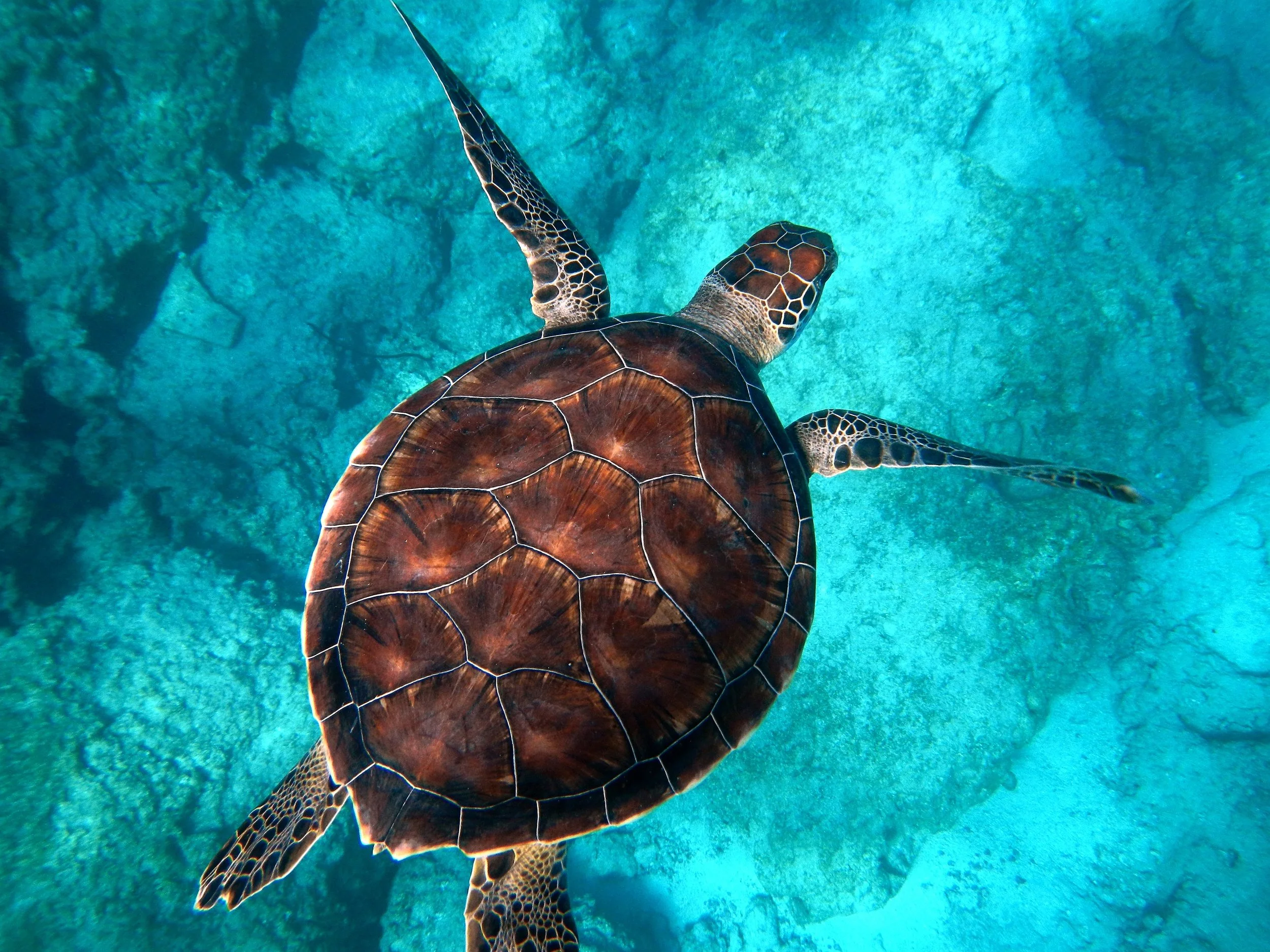
- turtles (if common in area)
- sea urchins
- rays in shallow lagoons
Everything is viewed from above, but still surprisingly clear in tropical waters.
Who Should Choose Snorkeling
Snorkeling is ideal for:
✔ non-swimmers (with life jacket)
✔ families
✔ older adults
✔ anyone wanting a simple ocean activity
✔ budget travelers
Scuba Diving for Beginners
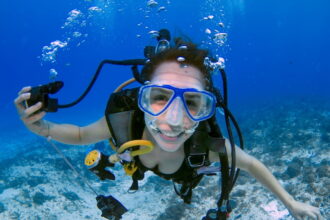
Scuba diving allows you to breathe underwater using a scuba tank and regulator — creating a fully immersive experience.
Beginners usually take a Discover Scuba Diving or Intro Dive, which includes:
✔ short training
✔ shallow dive with instructor
✔ gear & safety briefing
What You See
Scuba diving opens up the full underwater world, including:
- coral gardens
- shipwrecks
- sharks (harmless reef sharks)
- sea turtles
- stingrays
- octopus & squid
- deeper reef ecosystems
Instead of watching from above, you’re inside the environment — fish swim around you, not away from you.
Gear Comparison
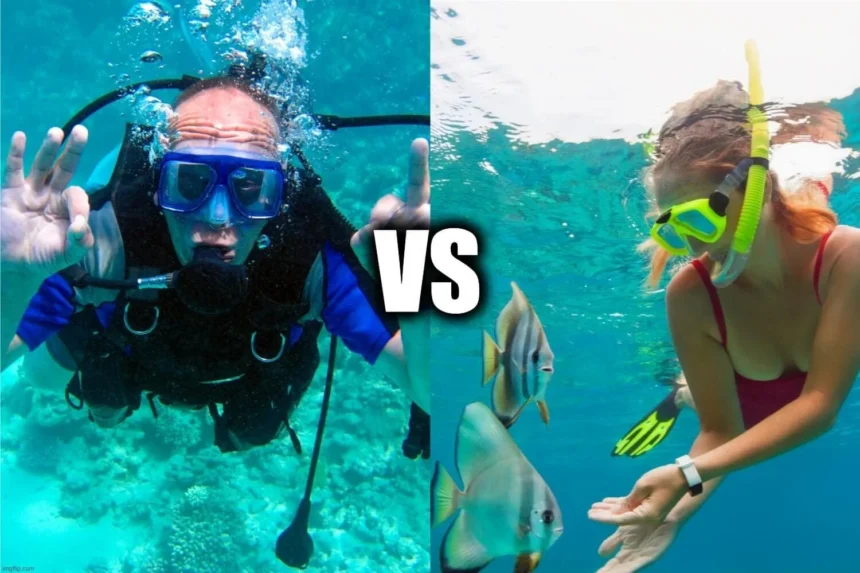
Snorkeling Gear
- mask
- snorkel tube
- fins
- optional: life jacket or rash guard
Light, easy, and cheap.
Scuba Diving Gear
- mask & fins
- regulator
- buoyancy control device (BCD)
- wetsuit
- scuba tank
- weights
- pressure gauge
Heavier setup and requires instructor handling for beginners.
Depth and Environment
Snorkeling Depth
0–2 meters (surface level)
You stay at the surface and can’t go deep without holding breath (not recommended for beginners).
Scuba Depth
6–18 meters for beginners
Professional divers go much deeper, but beginners stay in safe shallow limits.
Training & Certifications
Snorkeling
✔ No certification
✔ No training required
✔ Quick learning
Scuba Diving
✔ Certification optional for intro dives
✔ Training & instructor required
✔ Full certification (Open Water) gives you long-term access to diving worldwide
If you want more info on certification, check our guide to Discover Scuba Diving for first-timers on ScoobaDiveGuide.
Cost Comparison
| Activity | Average Cost |
|---|---|
| Snorkeling Tour | $10–$60 |
| Intro Scuba Dive | $80–$150 |
| Open Water Course | $300–$550 |
Snorkeling is cheaper, but scuba diving offers much more immersive exploration.
Fitness & Swimming Skills
Snorkeling
✔ No strong swimming needed
✔ Life jackets often provided
Scuba Diving
✔ Basic comfort in water helps
✔ Instructor stays with you the entire dive
Non-swimmers can still try scuba in many controlled dive programs.
Safety Overview
Both activities are considered safe when done with proper supervision.
Snorkeling Risks (Beginner):
- sunburn
- fatigue
- shallow water conditions
Scuba Diving Risks (Beginner):
- equalizing ears
- panic from unfamiliarity
- equipment handling
Instructors manage scuba safety, so beginners rarely face issues beyond nervousness.
Which One Should You Choose? (Beginner Decision Guide)
Choose snorkeling if you want:
✔ low cost
✔ minimal gear
✔ surface-level coral viewing
✔ a family-friendly activity
Choose scuba diving if you want:
✔ immersive underwater experience
✔ close encounters with marine life
✔ small-group adventure
✔ long-term dive training potential
Realistic Beginner Example Scenarios
Scenario 1: Beach Vacation
☑ Snorkeling is enough for casual fun.
Scenario 2: Bucket List Experience
☑ Scuba diving gives you something unforgettable.
Scenario 3: Limited Budget
☑ Snorkeling wins.
Scenario 4: Love Marine Life
☑ Scuba diving is the winner.
Frequently Asked Questions
Do beginners need certification to scuba dive?
Not for intro dives — instructors guide you.
Is snorkeling easier than scuba?
Yes — it takes minutes to learn.
Can kids do scuba diving?
Many programs allow ages 10+ with parental consent.
Can non-swimmers snorkel?
Yes, with life jackets.
Which one lets you see more marine life?
Scuba diving shows far more variety and detail.
Final Thoughts
For beginners, both scuba diving and snorkeling offer unique experiences. Snorkeling is simple and affordable, while scuba diving is immersive and unforgettable. Many travelers end up doing both — snorkeling first, then scuba once curiosity grows.
If you want to truly explore coral reefs, shipwrecks, turtles, and vibrant underwater ecosystems, scuba diving gives you access to a world most people never see.